When scientists study a lake, they usually expect more people to mean more phosphorous in the water, often from fertilizer, detergents, septic systems, dog poop, and other human-related sources. And more phosphorous can mean more problems for water quality, as nutrient-hungry algae thrive when there is more phosphorus to feed them.
But between 1998 and 2022, something different happened in Lake Washington, even as the surrounding population boomed…

Lake Washington phosphorous bucks the trend
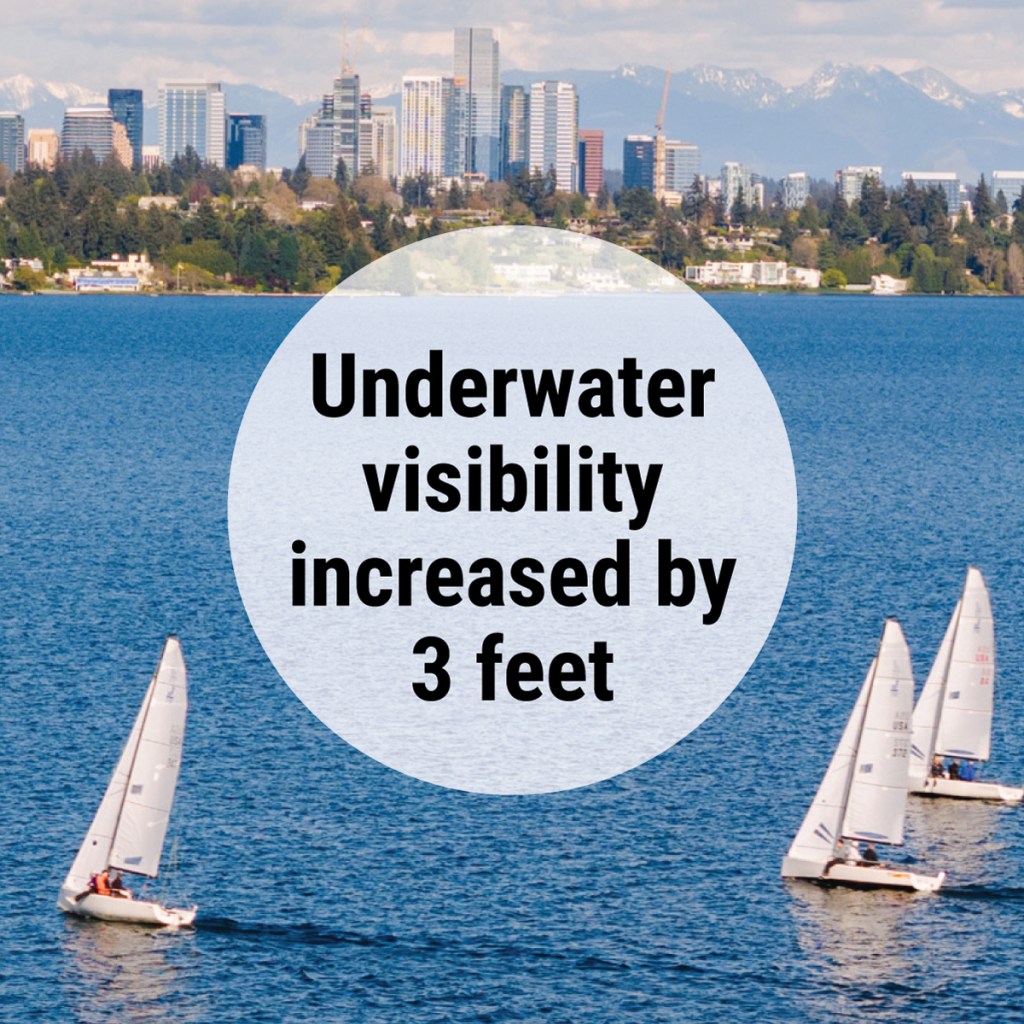
A new study titled Cities Can Grow Without Harming Lakes, written by Science Section researchers Daniel Nidzgorski and Curtis DeGasperi (now retired), found surprising improvements in Lake Washington water quality from 1998 through 2022, even as the watershed’s population grew by more than 350,000 people, or 34%. During that time, spring algae decreased by 50% and summertime underwater visibility increased by 3 feet!
“When we analyzed changes in Lake Washington’s water quality since 1998, we expected to find subtle problems and warning signals,“ said lead author Nidzgorski. “But to our surprise, we did not find any ways that population growth and development have harmed water quality. Instead, Lake Washington has had less phosphorus, less algae, and clearer water.”
Multiple environmental protections probably contributed to decreasing phosphorous levels in the lake, including regulations, upgraded stormwater infrastructure, erosion controls, transitioning homes from septic systems to sewer, and many everyday personal actions in the Lake Washington watershed.

Good policies pay off
Environmental regulations are a likely contributor to clearer water in the lake. One example is Washington’s 2011 Clean Fertilizers, Healthier Lakes and Rivers bill, which restricts the sale, display, and use of lawn fertilizers containing phosphorus on residential, commercial, and publicly owned land in our state. Lawmakers and advocates hoped to reduce the amount of phosphorous entering lakes by addressing this well-known source. (Side note: Most lawns didn’t need extra phosphorous in the first place and adding it to fertilizers was both expensive and unnecessary.)
Stormwater regulations, like those found in Title 9 of the King County Code and the Surface Water Design Manual, combined with city and county efforts under an annual Clean Water permit, likely deserve credit, too. These regulations improve erosion controls for construction sites and influence practices that catch soil and other particles – and all the phosphorous they contain – before they enter our waterways.
King County also has environmental regulations in the Critical Areas Ordinance (CAO) of the County’s Comprehensive Plan. In 2005 the CAO strengthened earlier protections for stream and wetland buffers, which slow down runoff and can reduce the amount of pollution that eventually enters the water. New updates in 2025 further enhance these protections.

“Scoop the poop!” and other healthy water habits
Community organizations and individuals also do their part to care for Lake Washington through volunteer monitoring, education and events, and everyday stewardship actions.
Want to know one of the most important things you can do? Scoop the poop! Dog poop is significant source of phosphorous. Scooping it and properly disposing of it in the trash might be the single best thing that most people can do to keep phosphorus (and germs!) out of Lake Washington.
Other healthy water habits include:
- Keep leaves and grass clippings out of the storm drain. Compost them or mulch them into your lawn.
- Fertilize responsibly. Lawn fertilizer should be phosphorus-free. Garden fertilizers and composts contain phosphorus, so apply only as much as your plants need, when they need it.
- Avoid bare soil and dirt patches that can wash away in the rain. Keep your soil in place with plants or mulch.
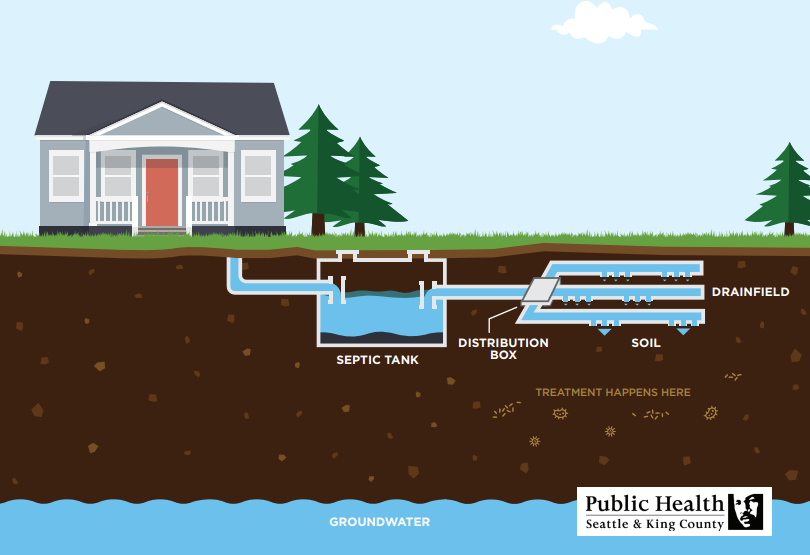
- If you have a septic system, perform regular check-ups and maintenance to keep it working well. Visit kingcounty.gov/septic to learn more.
Want to learn other ways to support cleaner water beyond phosphorous reduction? Our friends on the King County Hazardous Waste team have even more tips!
Learn more about Lake Washington phosphorous and our study
We can’t assign credit for decreasing Lake Washington phosphorous levels to one specific policy or practice. It’s more likely that a combination of complementary actions by government agencies, communities, and individuals are making a difference.
Check out the video below to hear from Daniel Nidzgorski and Beth LeDoux from the Science Section, as well as community member Gary Olson from the Thornton Creek Alliance.
You can also read the peer-reviewed study in Ecosphere, a national scientific journal from the Ecological Society of America (ESA) or explore our news release about this work on kingcounty.gov.
Links and Resources:
- Learn more about the study and hear from local leaders | kingcounty.gov
- Cities Can Grow Without Harming Lakes | Ecosphere
- Thornton Creek Alliance | A community organization caring for the watershed
- How to reduce stormwater runoff pollution | King County
- Septic resources | King County