By Nalia Matias-Jacinto, WLRD Communications Intern
In King County, water is the foundation of daily life, cultural traditions, and thriving ecosystems. But what happens when poop pollution contaminates our water and dangerous levels of bacteria threaten public health and culinary treasures?
Solving that problem requires more than infrastructure alone. Scientists, public health experts, and communities must work together to keep the waters and the people of King County safe and healthy— and that’s exactly what we’re doing.
Collaborating for cleaner water
From lakes to streams to beaches, unhealthy levels of bacteria in the water can be a problem at any time of year. One of the primary sources of harmful bacteria is poop. The more poop in the water, the more bacteria, which creates health risks for people swimming, playing in the water, or eating shellfish.
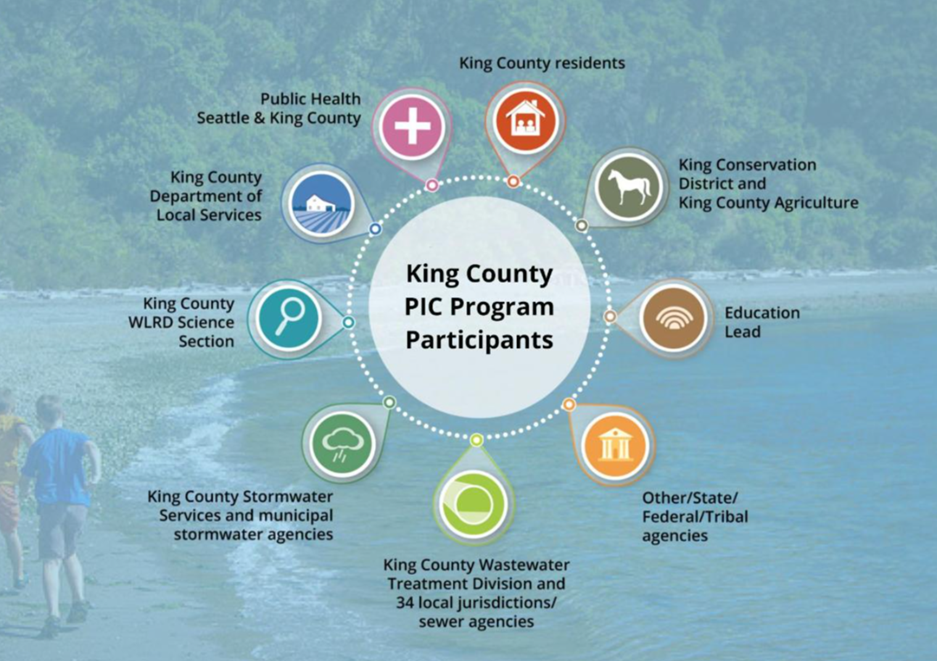
King County created the Pollution Identification and Correction (PIC) program, a collaborative approach to find and fix sources of poop within designated high-risk areas. Partners in the program include experts from the Science Section, Stormwater Services, Public Health- Seattle & King County, and other King County teams. We also work with local and state agencies, tribal governments, community organizations, and residents. It takes a lot of collaboration to tackle poop pollution in water!
Old systems, new threats
In King County, there are an estimated 85,000 on-site sewage disposal systems. Also known as septic, these systems are not connected to wastewater treatment infrastructure. The average lifespan for a properly installed and maintained septic system is about 30 years, but two-thirds of King County’s septic systems are older than that. These aging systems are more likely to fail and leak bacteria from untreated waste into stormwater runoff. From there, in can wind up in our waterways.
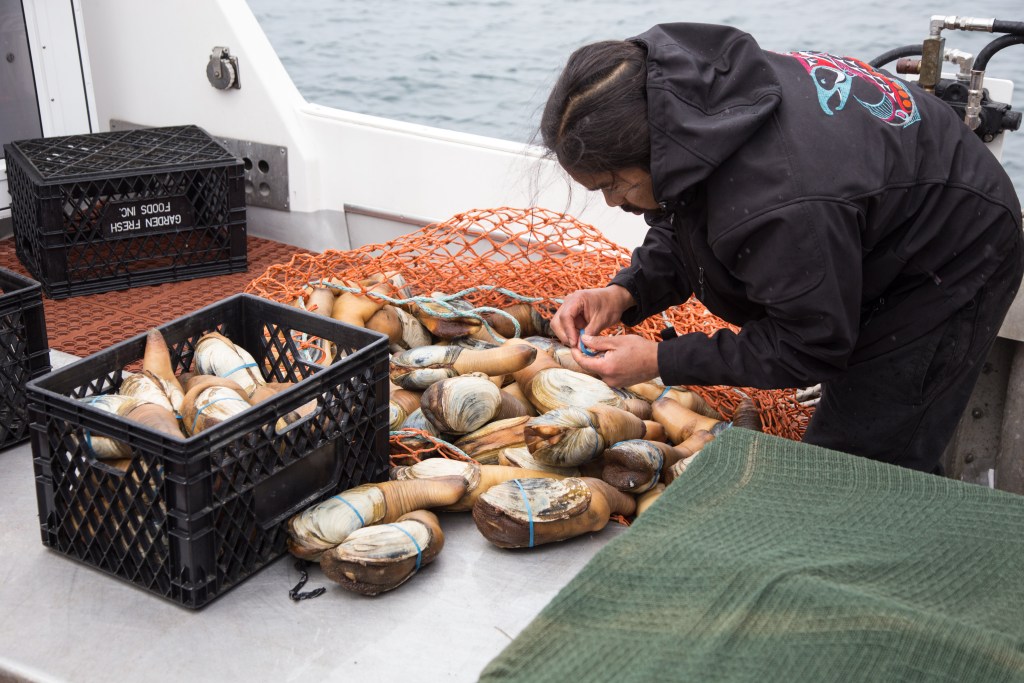
One area harmed by this problem is Poverty Bay, located along the eastern coast of Puget Sound from Des Moines to Federal Way. In Poverty Bay the shellfish harvesting area is nearly 1,100 acres, but 825 acres are off-limits for all or part of the year due to poop pollution. Too much bacteria in the water makes it unsafe to eat the shellfish there, namely Pacific geoduck (Panopea generosa).
This loss is especially felt by members of the Puyallup Tribe of Indians, who harvest geoducks and other shellfish for commerce, ceremony, and subsistence. These shellfish beds, culturally significant and secured by treaty rights, are among the last harvest areas along King County’s mainland shoreline that remain open at all.

Finding and fixing a source of poop pollution
Since 2020, water quality scientists from the Science Section have been testing water at five creeks that flow into Poverty Bay (Redondo, Cold, McSorley, Woodmont, and Massey). They discovered Massey Creek had the highest average concentration of E. coli bacteria of all those creeks. E. coli tells us there’s a poop problem.
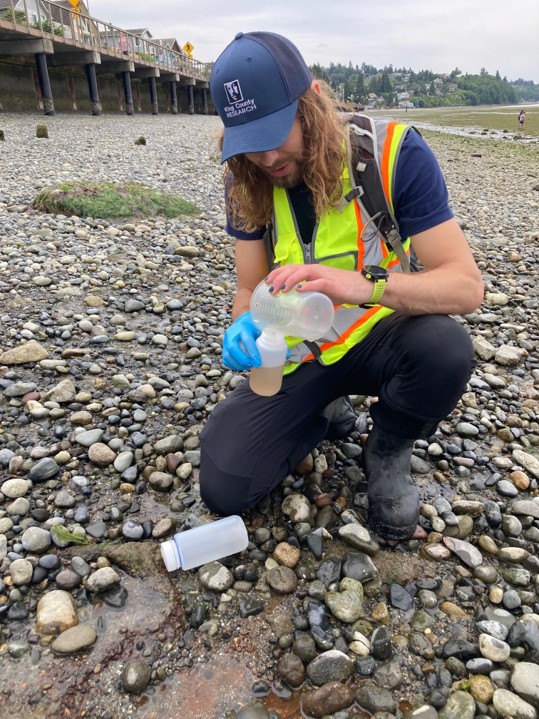
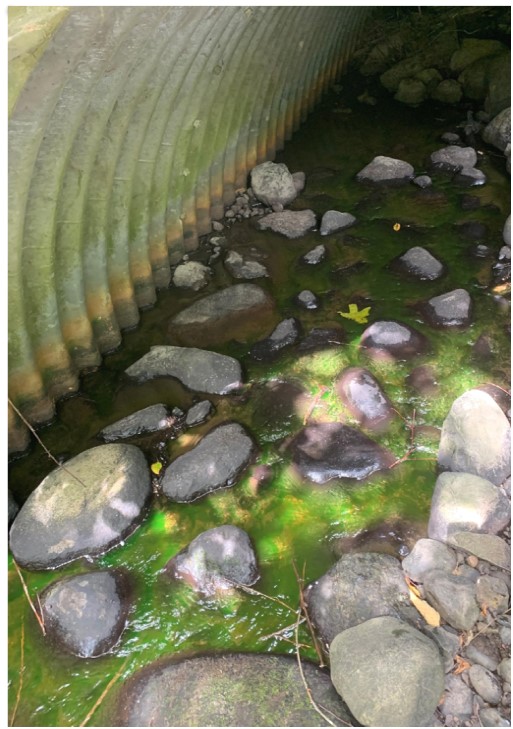
Measuring the problem was the first step, and then the PIC team had to find out why it was happening. Our scientists waded through poopy streams. They visually inspected the banks and sampled dozens of sites to pinpoint E. coli hotspots. Eventually they traced the source to a stormwater pipe that was discharging raw sewage straight into the creek. Public Health-Seattle & King County and a nearby homeowner helped with additional testing, and soon the culprit was revealed: a failing septic system.
In a victory for the community, fishers, and the environment, the homeowner collaborated with Public Health, the City of Des Moines, and the local sewer district to resolve the issue. The failing septic system was decommissioned and the property connected to Midway Sewer District.
As it turns out, one failing septic system can have a big impact! The water quality in Massey Creek is much better since the repairs, but there it more work to do. King County will continue to collect and analyze water samples regularly at the mouth of the five creeks in Poverty Bay through November 2025 to monitor poop pollution there. Similar work is ongoing in other parts of King County.

Investing in prevention
Because prevention is key, King County offers a septic system maintenance and side sewer rebate program to provide financial assistance to eligible homeowners. In the case of that failing septic system by Massey Creek, the homeowner applied for and received a $5,000 rebate from the program to solve the problem.
Public Health also provides educational and technical resources to show homeowners how to maintain their septic tank systems. Community groups and local businesses also offer advice and services to help people keep their septic systems functioning as intended.
What YOU can do to reduce poop pollution
The PIC program is essential to finding and fixing contamination sources in Poverty Bay and across King County. But there also are actions you can take to reduce poop pollution in your own community right now.
Click the links below to get more information about different ways to do your part.
- Maintain your septic system
- Manage livestock manure
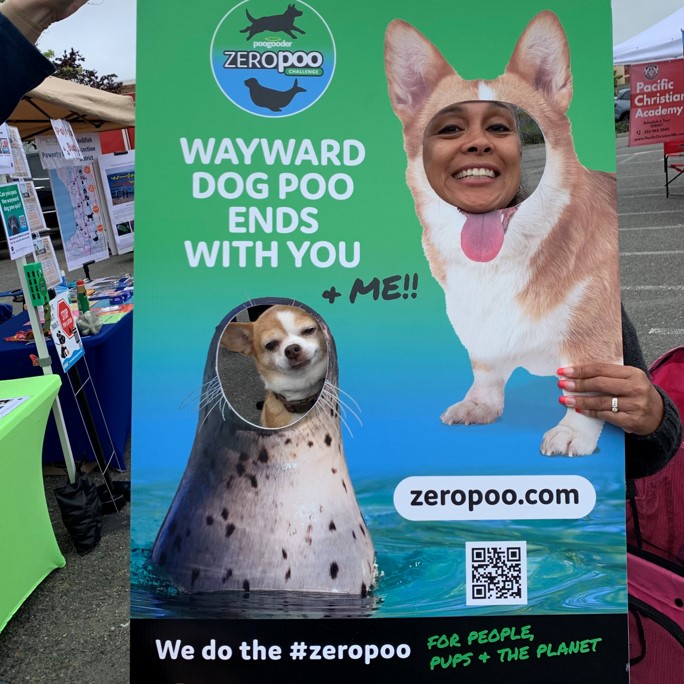
- Dispose of pet waste
- Don’t feed geese and ducks
- Report problems like spills or illegal dumping
- Plant and maintain native vegetation along waterways
Partners and Funders
Caring for King County’s water is a shared responsibility, and targeted actions like those happening around Poverty Bay require significant coordination and lots of dedicated people who make water cleaner for all of us. We’re grateful for our partners on the Massey Creek project:
- King County’s Department of Natural Resources and Parks, which includes the Science Section, Stormwater Services, and the King County Environmental Laboratory
- Public Health-Seattle & King County
- PIC Working Group
- Puyallup Tribe of Indians
- Cities in King County
- Sewer districts
- Residents and property owners
- Community organizations
- Washington State Department of Ecology
- Washington State Department of Health
We also thank our federal partners in this work. This project has been funded wholly or in part by the United States Environmental Protection Agency under assistance agreement PC-01J89801-1 to the Washington State Department of Health. The contents of this document do not necessarily reflect the views and policies of the Environmental Protection Agency, nor does mention of trade names or commercial products constitute endorsement or recommendation for use.