Many people are surprised to learn that King County has an entire team of scientists working behind the scenes to understand and protect our environment. In fact, the Science Section has nearly 50 dedicated professionals working in, for, and with communities throughout our region!
Genuine connections and diverse perspectives make our work better, but if other people don’t know who we are or what we do, how can we forge relationships, welcome new views, and respond to community needs and concerns? If local students don’t know jobs like ours even exist, are we losing the opportunity to inspire a whole generation of homegrown scientists?
Questions like these led us to create something new: Career Cards. (jump to the bottom to view the Career Cards)

Why Career Cards?
The idea came from our colleagues in King County’s Wastewater Treatment Division. They created career cards to teach people about the many jobs that help keep our region’s water clean. We loved the concept and realized it could help us, too. Our section includes scientists from many different backgrounds, including ecologists, chemists, data analysts, biologists, hydrologists, and more. But unless someone already works in environmental science, they might never hear about these jobs, let alone apply for one.
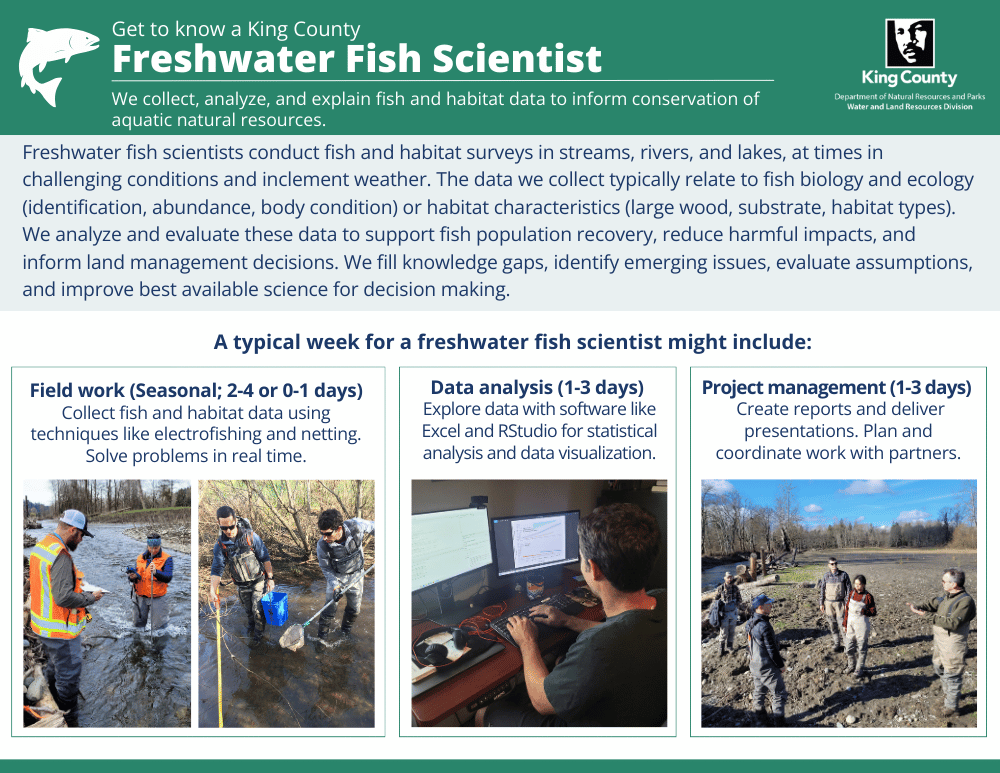
Career Cards give us a quick way to share what we do, especially with young people and anyone exploring new career paths. Each card highlights a different type of environmental science job in our section. They explain the day-to-day work and highlight skills that make job applicants more competitive.
Inspiring future scientists
We created these cards with students in mind. When we visit classrooms or host community events, we want young people to see themselves in these careers. Maybe they love being outdoors and fixing things. Or they’re curious about the natural world and how to protect it. They might enjoy using data to tackle real-world problems. Environmental science has room for all that, and more.
By showing the variety of jobs in our section, we hope to spark curiosity, start conversations, and maybe even inspire the next generation of environmental scientists.

Sharing the science
The Science Career Cards also help us explain the huge range of projects our team works on. We monitor water quality, study wildlife, track toxic chemicals, and inform decisions that help keep our environment healthy. Our work spans rivers, lakes, marine waters, shorelines, and communities across the county.
These cards offer a glimpse behind the scenes of our field, office, and lab work. They don’t cover every aspect of our jobs, but they’re a good introduction to who we are, what we do, and why it matters.
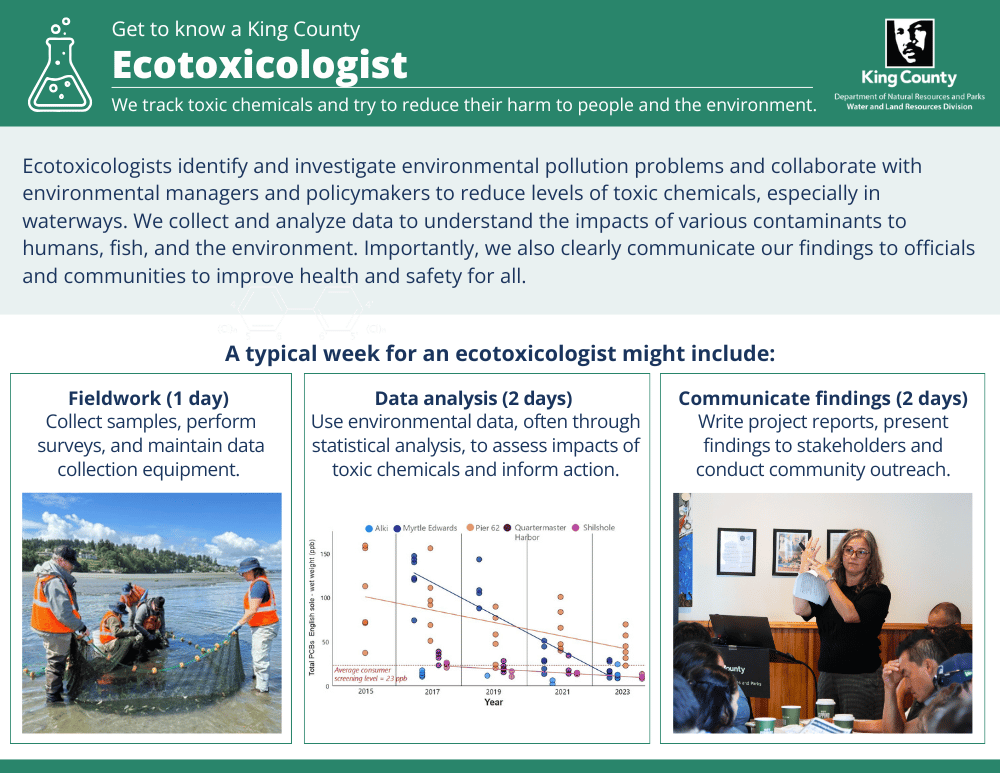
Explore the Science Career Cards
We’ll be sharing our Career Cards at community events, school visits, and online. We hope they make it easier for people to learn about the Science Section and maybe even imagine themselves joining our team someday.
We invite educators, students, and job seekers to explore the cards and email us with questions. Get a printable PDF for each of ten different jobs using the links below or download the entire set (22MB).
Note: These cards are not advertisements for job openings. View current job opportunities in King County’s Department of Natural Resources and Parks, including in our Water and Land Resources Division.
More information:
- Meet an ecotoxicologist from our team
- See what fieldwork can look like for our ecotoxicologists
- Check out a poop pollution problem our Stream Team helped to solve
- Go for a walk with a wetland scientist
- Learn more about the Science Section’s work on kingcounty.gov
- Discover environmental education resources on kingcounty.gov