Oh, October. The crisp breeze hinting at cooler days to come. The stunning displays of fall foliage. The shifting, softening sunlight. If you love this time of year, you’re not alone: toxic algae do, too, and typically peak in our lakes this month!
Fortunately, the Science Section has a team of lake scientists who work with other King County agencies and local communities to help keep people and pets safe from toxic algae. Together we monitor, test, and respond to algae incidents so everyone can enjoy our lakes safely all year long.

What is toxic algae?
Toxic algae is cyanobacteria, also called blue-green algae. They are actually a type of bacteria- not true algae- that live in water and photosynthesize. Sometimes cyanobacteria produce toxins called microcystin, which causes skin rashes and stomach problems, and anatoxin, which causes tingling or numbness in people. Pets, especially dogs, are at high risk of serious illness and even death from drinking contaminated lake water or licking algae off their fur.
Despite their name, toxic algae don’t produce toxins all the time. “Some species of cyanobacteria have the genes necessary to produce toxins, but they don’t always use them,” says Rachael Gravon, a lake scientist and algal authority in the Science Section. “We don’t know the exact triggers, but stress, competition, sunlight, temperature, or a combination of those factors could be involved.”
Toxin production is variable and unpredictable. The only way to know if there are toxins in the water at a given time is through laboratory testing. That’s why we take a cautious approach and say:
“When in doubt, stay out.”
Is this stuff in my lake toxic algae?
It’s important to remember that algae are a normal and vital part of lake ecosystems. Green algae, aquatic plants, and even pollen are often mistaken for cyanobacteria, but won’t cause you harm. When toxic algae bloom, the water may look green, blue-green, yellow, white, brown, or even red. The cyanobacteria might form clumps or look like paint or scum floating on the surface.
If you have questions about algae in a King County lake, check nwtoxicalgae.org to see if the lake was tested recently for toxins. If there’s no recent data for that lake, you can send a photo and description to lakes@kingcounty.gov. We’ll try to figure out what you’re seeing and determine if laboratory testing is recommended. King County routinely tests the water at many lakes between May and October, and we respond to reports of suspicious algae at any time of year.


Responding to harmful algae blooms
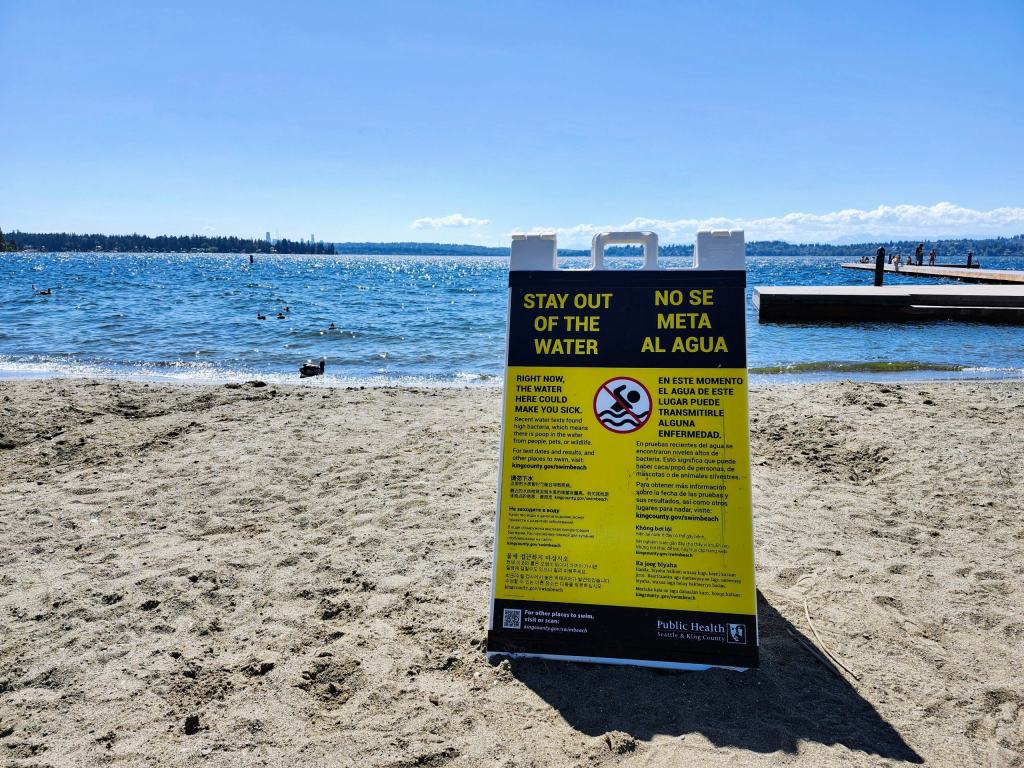
When lab tests confirm toxins are present, we use signs, website updates, and email and text alerts to get the word out as quickly as possible.
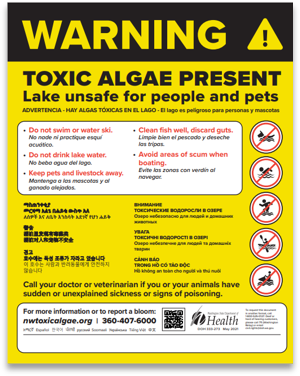
If you’re at a lake and you see a yellow WARNING sign, toxin concentrations in the lake are unsafe for people and pets. Do not swim or engage in other water-contact activities and keep children and pets out of the water. If you’re fishing, clean your catch well and discard the guts, and if you’re boating, avoid areas of scum.
When there’s a red DANGER sign posted, the lake is closed to people and pets because there are very high concentrations of toxins in the water. Do not swim, wade, fish, boat, or touch the water.

There are also two websites where we post toxic algae warnings. The Washington State Toxic Algae website has information about toxic algae in lakes, ponds, and streams across the state. The King County swim beach website has updates about toxic algae in King County lakes, as well as information about bacteria and water temperatures.
For direct notifications, we send emails and texts to people who subscribe to King County’s lake alerts. Sign up to be notified any time a King County lake is closed due to toxic algae or bacteria.
We can all be algae aware
Our lake scientists work together with colleagues from the King County Environmental Lab and Public Health – Seattle & King County to monitor water quality, test for toxins, and respond quickly when problems arise. We also rely on a network of volunteer lake stewards and reports from lake visitors and park staff to help us find toxic algae blooms early.
“Our toxic algae response program links science with action,” says Gravon. “Issuing alerts and providing accurate, up-to-date information helps communities be algae aware, not algae scared.”
So get out there and enjoy the season, but if you see a lake with a strange color or scummy surface, stay away! Do not swim, drink the water, or let children or pets play in it. Even small amounts of toxic algae can be harmful, so if you think you or a child or pet were exposed to toxic algae and have sudden or unexplained symptoms, call your doctor or veterinarian right away.

Links and Resources:
- Toxic Algae | King County
- Lake alerts and swim beach monitoring | King County
- Lake Stewardship Program | King County
- Freshwater Algae Control Program | Washington Department of Ecology
- Blue-Green Algae | Washington Department of Health
- Swim Safety | Public Health – Seattle & King County