The late Spring weather made it hard to decide what to wear. Robins, purple finches, and black-headed grosbeaks chirped and trilled, untroubled by such choices. Beyond a field of young native plants and a wall of mature trees, the Snoqualmie River flowed. And then the sound of crunching gravel announced new arrivals.
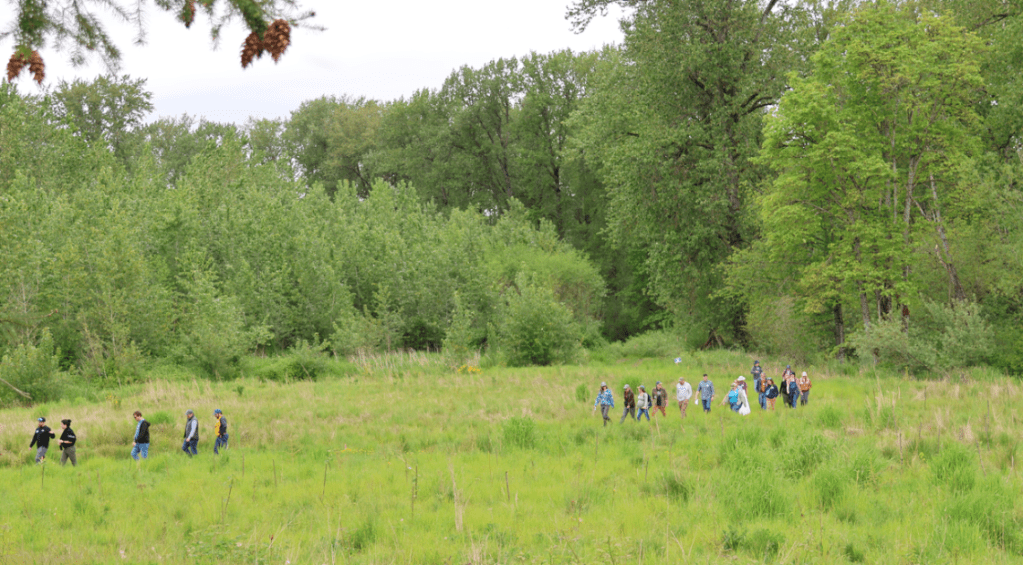
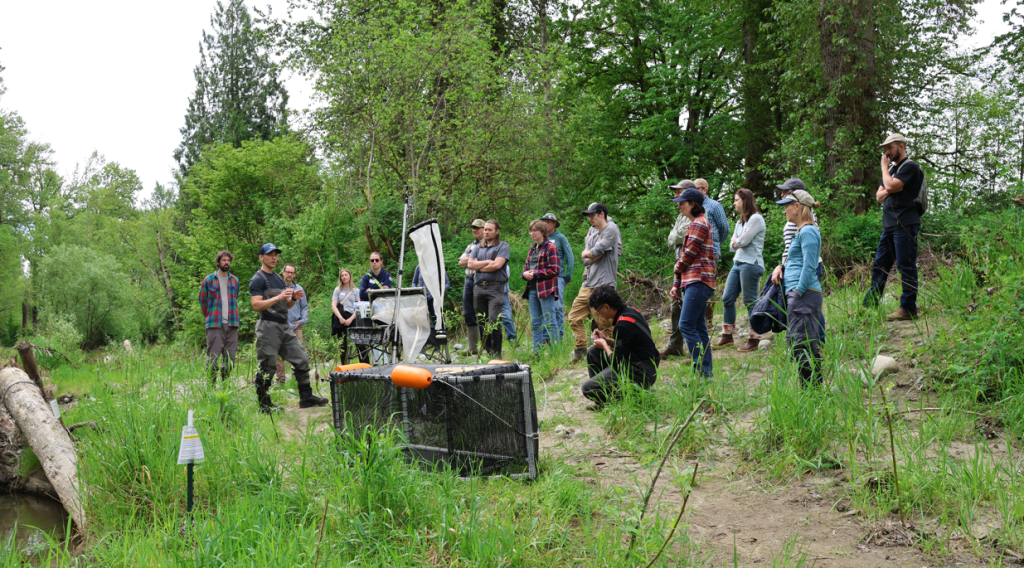
One year earlier in Fall City, King County completed its biggest-ever river and floodplain restoration project*. Now a group of 40 scientists, community members, Tribal representatives, and other salmon recovery partners gathered at the site. They were excited to reconnect, explore the project area and learn how salmon are responding to new and restored habitats. After a welcome from Perry Falcone, supervisor of the Science Section’s Watershed and Ecological Assessment Team (WEAT), the tour began.
Bringing a Snoqualmie River side channel to life
At one location, attendees heard from Snoqualmie Basin Steward Andrea Mojzak. She discussed the restoration project’s history, project design elements, and the extensive collaboration required to complete the work. Andrea also highlighted ongoing improvements to the site and described how salmon were spotted in a new side channel almost as soon as crews reconnected it to the Snoqualmie River during construction. Then attendees took a closer look at the side channel, large wood installations, and plantings. These project components all increase and improve habitat that salmon and other wildlife need to thrive.


Real-time salmon science
At another location, Josh Kubo, a Science Section fish ecologist, discussed his applied research with young Chinook salmon (Oncorhynchus tshawytscha). Chinook salmon are native to the Snoqualmie River, but they are threatened by a history of widespread habitat loss and degradation. This restoration project and Josh’s research could help.
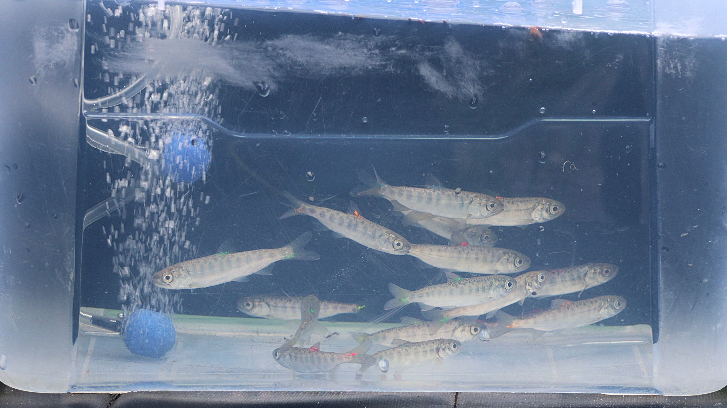
Josh discussed his current study investigating Chinook growth, diet, and food supply. He also shared promising findings that suggest juvenile Chinook salmon are already benefitting from this restored habitat. Just a few feet away, floating enclosures- which hold and rear the study fish- bobbed gently in the side channel. A small tank of neon-tagged study fish** gave attendees a better look at the type of salmon we’re researching here and how they are uniquely tagged for identification. Vials full of tiny invertebrates showcased what these small fish feast on in the cold Snoqualmie water.


Science supports healthier habitats and better investments
When young salmon have access to a variety of complex, well-connected habitats, they can find more food, grow larger and faster. As a result, their chances of survival increase when they migrate to the ocean. One of the highlights of the tour was spotting wild young Chinook and Coho salmon (Oncorhynchus kisutch) swimming around the study site and using the restored habitats — further proof that these habitats are good homes for small fish.
This event wasn’t just about celebrating the project’s success. It also highlighted how restoration and scientific research go hand in fin. What we learn here can inform ongoing salmon recovery efforts and future investments on the Snoqualmie River, in King County, and beyond. We look forward to reporting the data and findings to partners and the public in the coming year.
Want to learn more? Check out this video about the salmon study and the scientists behind it. Then if you have more questions about King County’s salmon research, click here to email us!
Funders and Partners
*Funding for the broader $19 million restoration project, including the costs to acquire the property, came from a variety of sources, including competitive grants for salmon recovery, flood risk reduction, and agricultural productivity:
- Snoqualmie Indian Tribe for vegetation planting on a portion of the site
Many plantings in the restoration area were installed by the Snoqualmie Tribe, Oxbow Farms & Conservation Center, and the Washington Conservation Corps.
**The 2024 and 2025 juvenile Chinook studies were funded by: King County’s Cooperative Watershed Management grant program through the Snoqualmie Watershed Forum and the King County Flood Control District; WLRD’s Habitat Restoration Unit; and the Science Section Fish Resource Monitoring Program.
**The juvenile Chinook in this study were provided by the Tulalip Tribes and the Wallace River Hatchery.
Links and Resources:
- Walk on the wild side: Another story from the Fall City restoration site
- Scientists confine, study Chinook at restored Snoqualmie River habitat | The Seattle Times
- VIDEO: One year later, King County’s largest-ever floodplain restoration project is improving salmon health | KingCounty.gov
- Executive Constantine tours King County’s largest-ever floodplain restoration project, improving habitat and protecting farmland along the Snoqualmie River | KingCounty.gov
- Salmon and Trout information – KingCounty.gov