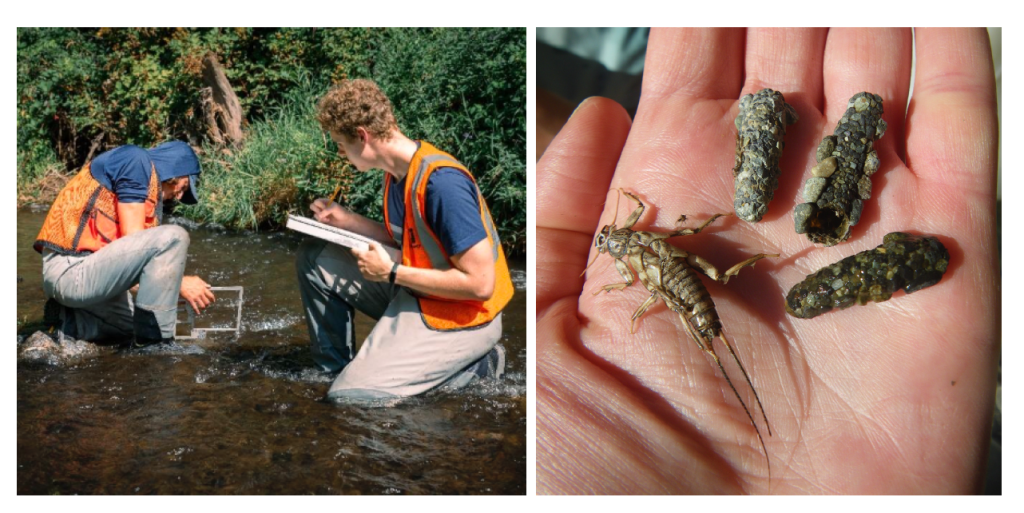
The Science Section brings together experts from different fields to investigate and address environmental concerns. But what is a limnologist, a gager, or a hydrogeologist? Why do we need fish ecologists and oceanographers? What do they do and why does it matter?
In Five Questions you’ll meet the people behind the science and learn about their work and what it means for the rest of us.
We’re kicking off the series with Jennifer Lanksbury, an ecotoxicologist from our Toxic Chemical Assessment team! Click the links throughout to explore more of this team’s fascinating and important work.

Question 1: What is your job here at King County?
“I’m an ecotoxicologist with King County’s Department of Natural Resources and Parks in the Water and Land Resources Division (WLRD). I have worked with WLRD’s Science Section for about six and a half years now.
“An ecotoxicologist is a person who looks for and tracks toxic contamination in the environment and determines whether the contaminants could be hurting local organisms. Ecotoxicologists can look for toxic contaminants in air, water, sediment, or soil, and track contaminants in freshwater or marine organisms or animals that live on land.
“We help people understand where contaminants occur in the environment, how much contamination is there, what animals are affected, and potentially help find where the pollution is coming from. That kind of information is important when considering whether and how to clean up a polluted environment.
What are contaminants?
Contaminants are substances or chemicals that can harm people, animals, or the environment. They come from many sources, including industry, agriculture, and household products.
“The contaminants that we look for include metals. Some occur naturally in the environment but accumulate to toxic levels due to human activity. We also look for synthetic chemicals produced for industrial uses like PCBs, which are legacy chemicals that were used in transformers, paint, and caulking and persist in the environment today.
“We also look for pesticides that were used in the past, like DDT, and some current use pesticides like glyphosate. Sometimes we also look for chemicals produced by the pharmaceutical or personal care industries, like antibiotics, drugs used to treat diabetes or mental health conditions, or cosmetic-related chemicals like sulfates or parabens.
“There are lots of human-produced contaminants in the environment that we can look for. The ones we tend to focus on are usually the ones known to cause harm to people and/or animals and are suspected to be in our surrounding environments.”

Question 2: How does an ecotoxicologist help people, animals, or the environment in King County?
“My team and I provide scientific data on where contaminants are in the environment and how much is there. We want to find out what chemicals are present, so we know what needs to be cleaned up. We also track down the sources of those contaminants to help King County’s leaders figure out whether they can shut off that valve, so to speak.
“The information we gather helps decision makers decide where to focus effort and money when it comes to environmental cleanups. That information might come from an investigation of soil samples, for instance. If contamination is suspected on a parcel of land King County is considering purchasing, they will want to know if it needs cleaning up.
“The County also uses data from our long-term tissue monitoring program, where we collect fish and shellfish from various lakes, rivers, and marine waters in King County, to better understand where pollution is occurring in the environment and what species are being impacted.
“Our data about contaminants in fish and shellfish also help people who want to go fishing in King County decide the safer places to go, the safest species to eat, and which fish they should avoid. That data also gets used by the Washington State Department of Health to help them make fish consumption advisories. And our team uses the data to offer fish-eating recommendations to King County fishers, so they can make wise decisions about fishing here.”
Question 3: A scientist’s work can be very different from day to day or across seasons. What is your favorite kind of workday?
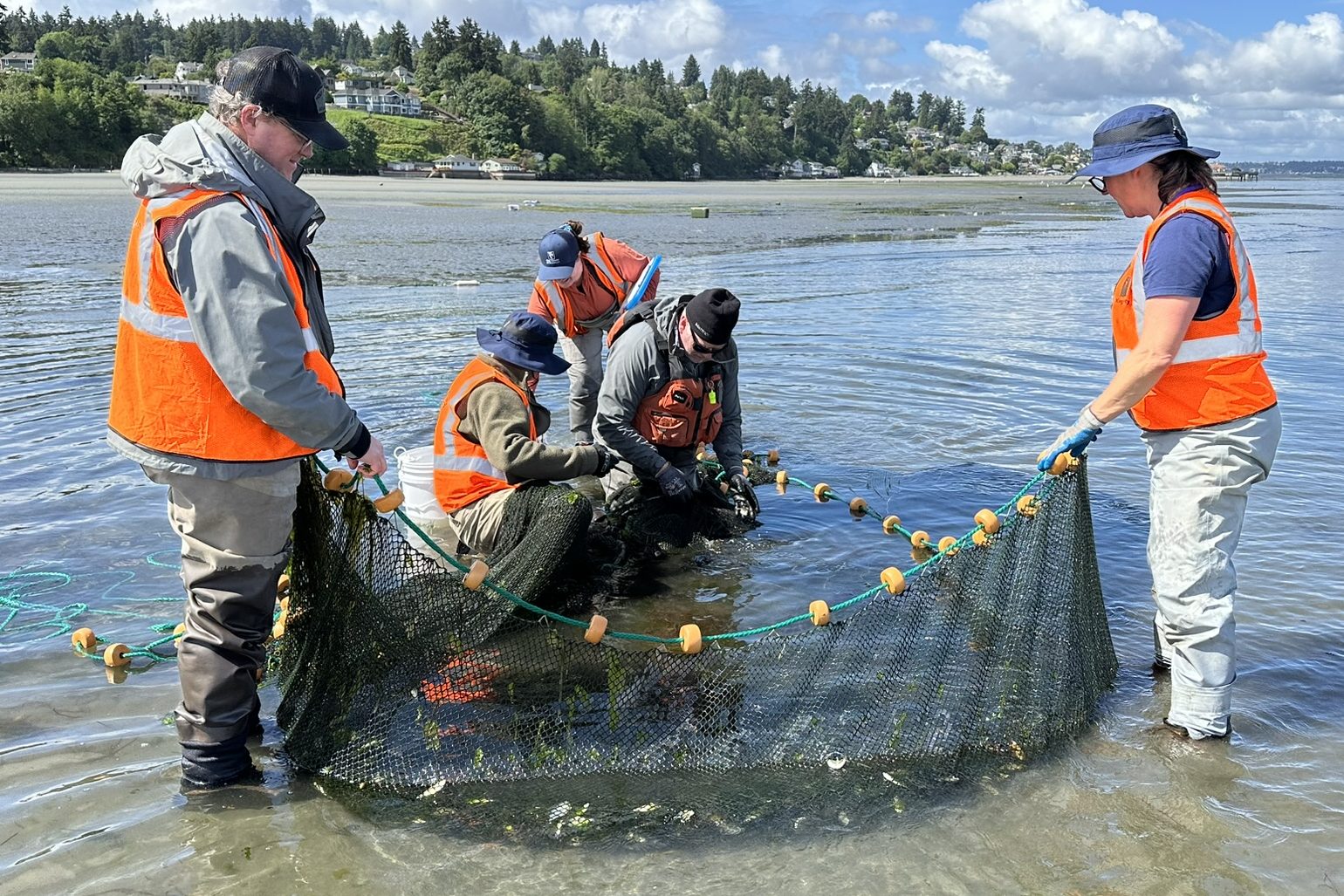
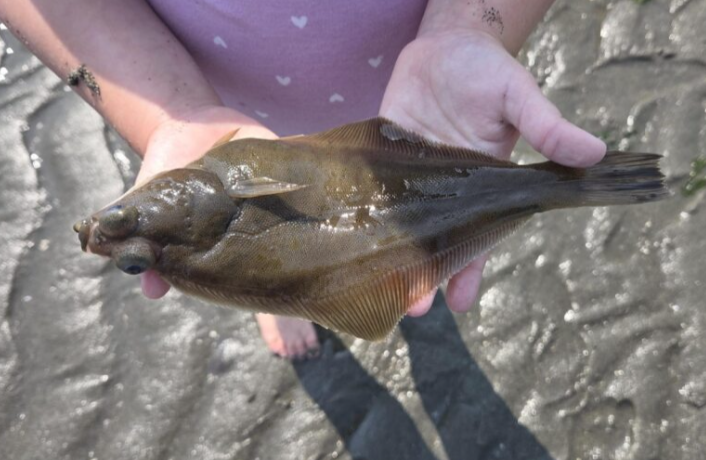
“I think my favorite type of workday is when I get to go out into the field and collect animals that we use for our contaminant research. Usually that involves sampling fish or shellfish, which includes going out either on a research vessel or to the beach with a team of people and nets. When we look for bottom fish in Puget Sound, we use a big trawl net from a boat. When we go after smaller fish, like marine perch that live in shallower waters, we go to beaches and cast seine nets out into the water to catch them.
“Last summer we started doing those beach seining surveys because we realized people in King County are eating marine perch and we hadn’t been tracking contaminants in those fish. It was exciting to learn this information and consider making a change to our program, and it was fun to try a new fishing technique!
“I really enjoyed bringing in the catch and identifying the various kinds of marine organisms, keeping only the ones we needed and releasing the others back into the water. Each of the animals we capture is brought in for testing at the King County Environmental Lab to look for contaminants in their bodies.”
Question 4: What is the hardest or most challenging part of your job?
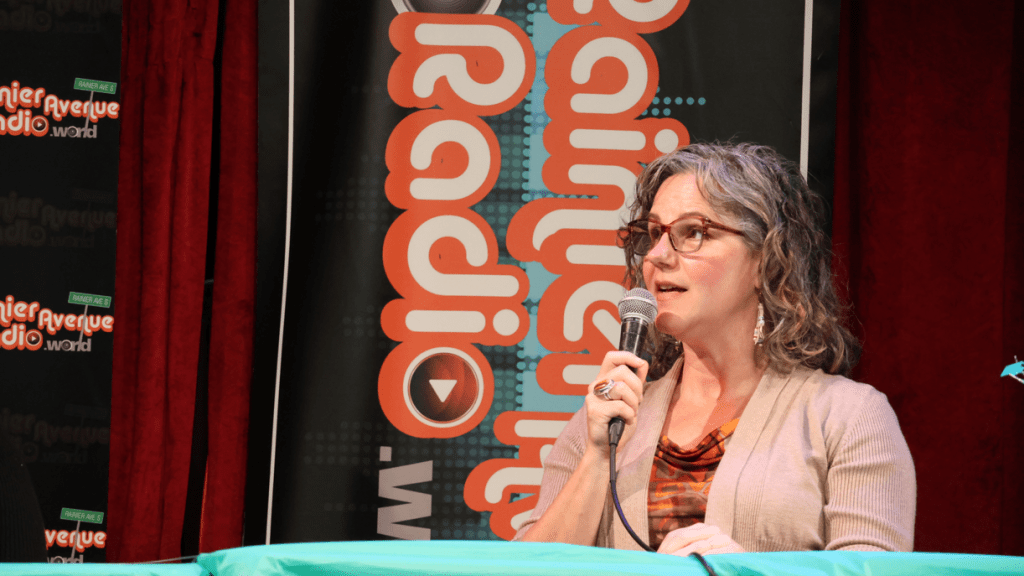
“Probably the most challenging part of my job is figuring out how to best communicate our findings to the rest of the world in a way that is understandable and engaging and still retains some of the complexity that is often inherent in our work. We want people to understand where and how contaminants are coming into our environments and their impacts on wildlife and humans. To do this we need lots of different methods of communication, not just writing dry scientific papers and giving conference talks.
“I’m learning that it helps to put our research into the context of a story, so people understand what’s going on. If we can include information about how they can help improve conditions in our waterways- even better. But it’s not always easy to put together an interesting story when you’re bogged down in the scientific details. Luckily, we have help from our communications staff these days!”
Question 5: What’s something interesting about your work that you want really people to know?
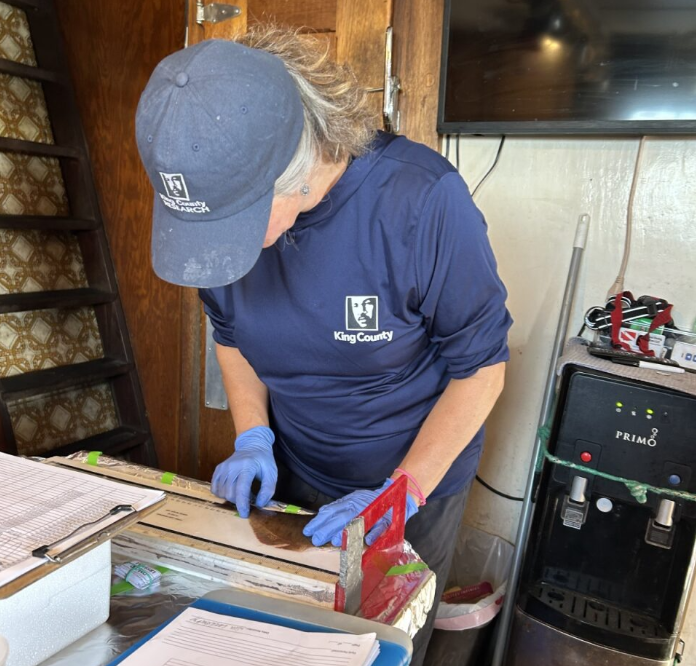
“One of the interesting things I don’t think a lot of people know is that we don’t just look for contaminants in fishes’ muscle tissue- the parts that people eat. We also take samples of their blood for evidence of contaminants that can’t be found in their muscles. It sounds funny, but we become fish phlebotomists during some parts of our surveys.
“When we extract a fish’s blood, we’re looking for a protein in the blood plasma called vitellogenin. That’s a protein female fish produce to help them make egg yolks for when they are ready to reproduce. We know that male fish are not supposed to produce vitellogenin because they don’t make eggs, but sometimes, in contaminated areas, we find vitellogenin in the blood of male fish. That’s an indicator that they’re being exposed to one or more endocrine disrupting chemicals that is causing feminization of the male fish.
“A number of synthetic chemicals have estrogenic properties. Some examples include plasticizers like Bisphenol A (BPA) and phthalates; some pesticides including neonicotinoids; cleaning compounds that contain alkylphenols; benzophenones that are used in cosmetics; and legacy chemicals like PCBs. Another source is natural hormones released from humans and animals into the environment, as well as pharmaceutical hormones used in contraceptives and hormone replacement therapy.
“Testing the blood of fish for evidence of vitellogenin is another interesting way of determining whether or not organisms in the environment are being impacted by contaminants. I think that’s a really interesting and informative type of investigation.”
Jennifer and her colleagues in the Toxic Chemical Assessment team are an important part of King County’s efforts to protect the health of people, animals, and our environment. Explore more ecotoxicology projects to learn more about our work on PFAS, 6PPDQ, stormwater treatment, and more.
And if you have questions about ecotoxicology or Jennifer’s work with the Science Section, let us know!