As part of her graduate research, marine scientist Wendy Eash-Loucks identified four new species of sea anemones from the Pacific Northwest. Our original Get to Know… interview couldn’t end without talking more about these new anemones.
As you examined specimens and found four anemones that were new to science, what did it feel like?
It was definitely intimidating. My mentor, Dr. Daphne Fautin, was a subject matter expert, so she was always there to fall back on. I was using taxonomic keys and scientific papers to identify these organisms that people collected during deep-water trawls, sometimes 50-plus years ago and have just been sitting in a museum collection that no one’s been able identify yet.
I went through keys and papers to see if a specimen matched anything that’s already been described. In some cases I also had to figure out how to read German a little bit, because a lot of the papers were written in German in the early 1900s.
Then I had to document all the morphological (physical) characteristics about the organism to make a claim that it was something new to science. I identified probably a dozen or so species, and many were already documented and named, but there were a few new ones…
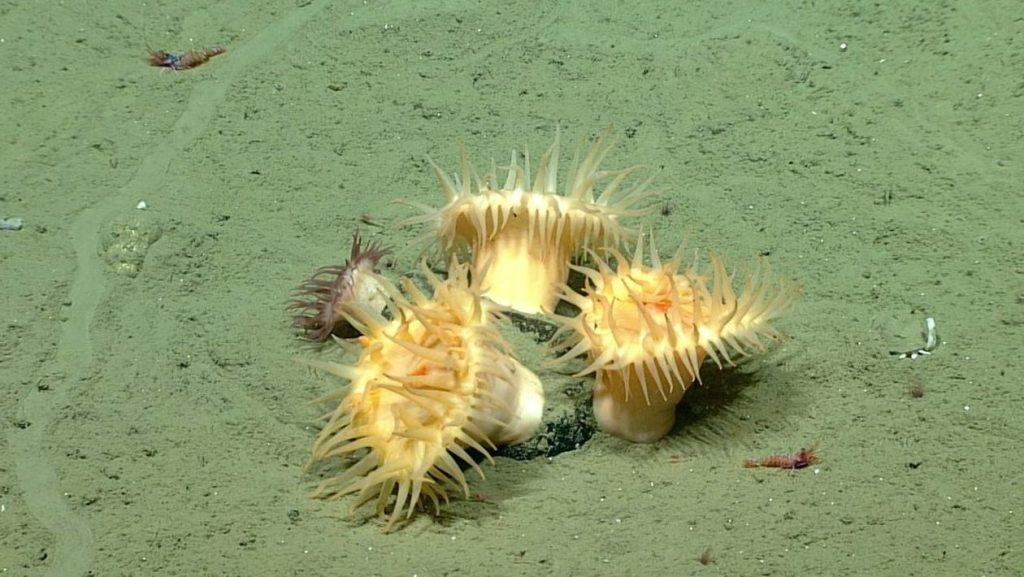
So, what are these new anemones?
Well, one of them, Ptychodactis aleutiensis, was collected from and named for the Aleutian Islands. It’s called a swimming anemone because it detaches from the bottom, and not a lot of anemones do that. Most just creep along the bottom, but the swimming anemones detach their disc and float to get from one place to another. (Visit ResearchGate.net to see photos and learn more about this swimming anemone)
The other three were deep-sea anemones. Two were named after people who collected some of the specimens. They did a lot of deep-water research and got these specimens into the museums. Those are Bolocera kensmithi and Sicyonis careyi.
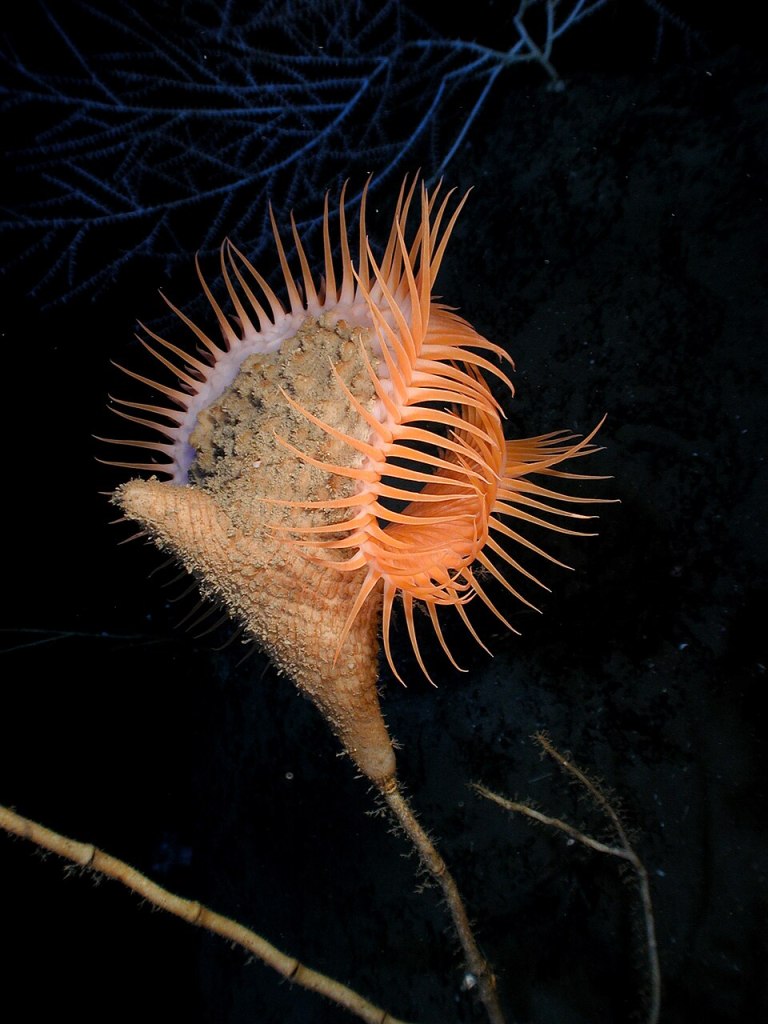
And then the last one I named after my grandfather, who passed away while I was working on my thesis: Actinoscyphia groendyki
Tell me more about A. groendyki.
It’s one of several species that are called Venus flytrap anemones. Most anemones have that standard shape of just an open circle with tentacles, but these actually close up, kind of like a clam shell with tentacles along the side.
A lot of these anemones look kind of gross and blobby in jars. I mean, they’re all beautiful, they’re all unique and weird in their own way, but they’re not as pretty as the tropical species. A lot of the deep-sea anemones are kind of bizarre and lumpy.

The first time you realized you were looking at a new species, did you celebrate or commemorate that moment?
I think I was most excited that I published my first scientific paper for the swimming anemone in the process. That was a big deal. It was very exciting.
But yeah. Unless someone in the future goes back and discovers these species are actually something that was previously described, then my name will be associated with these organisms for hundreds of years. That is pretty cool.