Puget Sound is a social, cultural, and economic lifeline for Western Washington, where the health of human communities and the health of the Sound are inextricably linked. Fortunately for the 4.2 million people who live in the region, there’s a large network of scientists and agencies working together to monitor, share data, and report on water, sediment, and biological quality in Puget Sound.
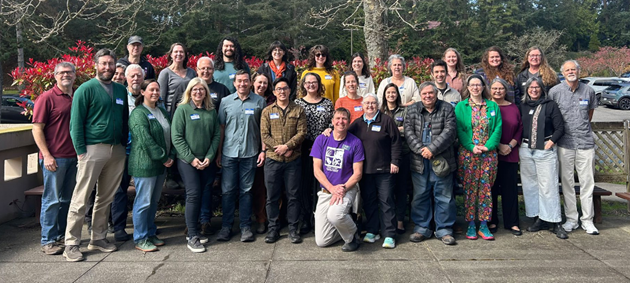
This network, the Puget Sound Ecosystem Monitoring Program’s (PSEMP) Marine Waters Work Group, recently published the Puget Sound Marine Waters 2025 Overview. This 15th annual report represents the collective effort of 54 contributors from federal, tribal, state, and local agencies, academia, nonprofits, and private and volunteer groups, including the Science Section’s Marine Team and our colleagues in the King County Environmental Laboratory.

Findings from the Puget Sound Marine Waters 2025 Overview
The Puget Sound Marine Waters 2025 Overview includes observations, data, and analysis of:
- Air, water, and climate conditions
- Bacteria and pathogens
- Plankton, forage fish, and a seabird called the short-tailed shearwater.
Check out the full report for more details and additional findings.
Overall, in 2025 Puget Sound waters were warmer, saltier, with less abundant biota.
In 2025, both major climate patterns that influence our region— the El Niño–Southern Oscillation (ENSO) and the Pacific Decadal Oscillation (PDO)— were in their negative phase.
This usually brings cooler air and ocean temperatures to Puget Sound, but 2025’s average air temperature (52.4°F) was still warmer than normal, tying for the fifth warmest year on record (going back to 1895). Summer was also warmer than usual. June through September ranked as the second warmest on record, making 2025 the fifth summer in a row with above normal temperatures.
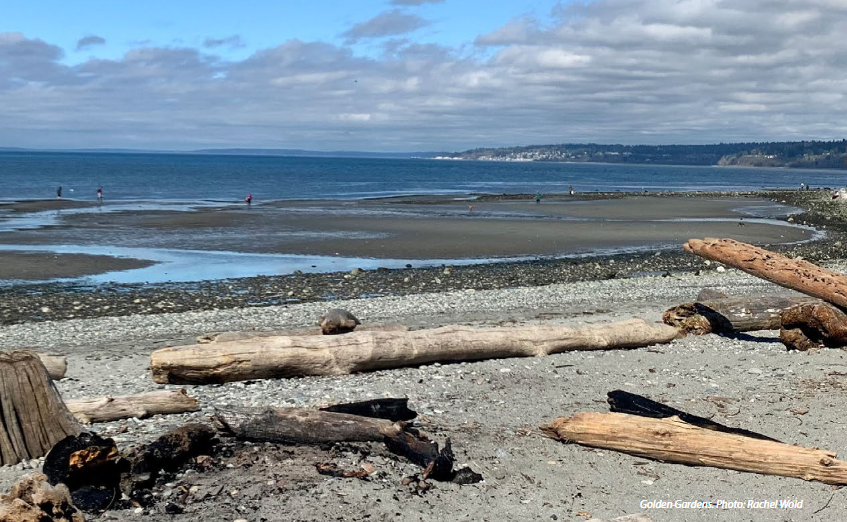
Annual precipitation was below normal, even with major flooding in December
2025 brought the third driest January since records began in 1895, receiving just 33% of normal precipitation. Spring and summer were also drier than normal, with April through July ranking as the fifth driest such period on record. The exception came in December, when the region received 146% of normal precipitation and became the ninth wettest December on record. In King County, the deluge triggered the longest flood activation in at least 40 years.
“For me, one of the most concerning things about 2025 was climate conditions—specifically warm air temperatures and lack of precipitation in the summer and fall. Higher air temperatures have ramifications, including heating up Puget Sound marine waters that were already affected by a Pacific Ocean marine heat wave. Coupled with the dry summer, the effect on biota is concerning if this climate pattern holds.”
-Kimberle Stark, marine biologist in the Science Section and Co-Editor of the Puget Sound Marine Waters 2025 Overview
Temperature and precipitation anomalies seemed to influence pathogens and bacteria
Changes in temperature and rainfall seemed to affect bacteria and pathogens in Puget Sound. Fecal indicator bacteria, which usually rise when there’s more runoff, were lower than normal for most of the year. Levels increased in December after the heavy rains and flooding.
There were also twelve confirmed Vibrio parahaemolyticus illnesses in September 2025. Vibrio bacteria cause most of the seafood-related stomach problems people experience. This was twice as many cases of Vibrio as in any of the previous five years and may have been linked to warmer‑than‑usual seawater.
Warmer-than-average waters were common, but there were cool, salty conditions on the Washington coast
Water temperature and salinity are part of a complex feedback loop that influences living organisms.
Offshore waters along the Pacific Northwest coast warmed a lot during Summer 2025, creating a marine heat wave that peaked in September. Puget Sound was also warmer than usual, with higher‑than‑normal temperatures , likely caused by extra heating at the water’s surface.
In the Central Basin (where King County monitors water and biota), water temperatures reached record highs in fall and winter 2025. Padilla Bay saw its warmest annual temperature since the major marine heat wave in 2015–16. Whidbey Basin and the San Juan Channel, both at the surface and in deeper water, were also warmer than average.
Different conditions were observed on the Washington coast, however, where especially strong upwelling of deep ocean water brought cooler, saltier water up toward the surface. Upwelling winds started earlier than usual and were the strongest and most sustained seen in more than ten years. Similar to 2024, coastal waters stayed cooler and saltier than normal throughout the upwelling season.

There were fewer phytoplankton, despite available light and nutrients
Phytoplankton are a tiny but mighty part of our marine ecosystems and an important indicator of environmental health. In addition to producing oxygen and sequestering carbon, they are the foundation of the ocean’s food web. Changes in phytoplankton numbers impact other marine organisms like crabs, fish, and larger predators throughout this interdependent system.
In 2025, weaker layering of the water may have led to fewer phytoplankton in Puget Sound. Chlorophyll levels, which indicate phytoplankton growth, were generally low even though sunlight and nutrients were available.
In the Central Basin, chlorophyll a was the lowest recorded since 2008, except in Elliott Bay, which had its highest summer level on record. East Passage had below‑normal chlorophyll all year, a big change from the previous three years. Whidbey Basin also had lower chlorophyll compared to past years. Additionally, microplankton biovolume in the Central Basin was 45.7% lower than the 10‑year average and was the second‑lowest year on record.
Changes in fish, mammals, and birds
Overall, many species higher up the food chain showed lower numbers in 2025, with a few exceptions.
Puget Sound herring declined again, reaching the sixth‑lowest estimate on record. There were two positive signs, however: herring spawning was observed at Cherry Point for the first time in three years, and spawning was confirmed in Oro Bay for the first time.
Early marine survival of juvenile Chinook salmon from Puget Sound has stayed low since 2014. And in the San Juan Channel’s fall survey, marine mammals were at their second‑lowest level on record.
In the same survey, seabirds were at their 4th highest recorded numbers and an unusually large number of short‑tailed shearwaters were seen throughout Puget Sound in the fall. More birds might sound like good news, but finding seabirds in surprising places or at unexpected times can point to problems in their typical feeding grounds or other environmental changes that force the birds into new areas.

Overall, the abundances of many key ecosystem components were lower than average
We still don’t know whether the continued warmer‑than‑normal ocean temperatures are playing a role in these changes. And we don’t yet know if 2025 was an unusual year or part of a bigger trend.
Stay tuned for next year’s Puget Sound Marine Waters Overview, when we’ll have a bigger picture of our current condition and what might lie ahead for Puget Sound.
“No single agency can monitor all aspects of the Puget Sound ecosystem. The fact that all the monitoring agencies come together on a regular basis to discuss current conditions and what we need to pay attention to, and communicate those findings, makes me optimistic, even in the face of concerning large-scale and regional climate patterns.
– Kimberle Stark, marine biologist in the Science Section and Co-Editor of the Puget Sound Marine Waters 2025 Overview