There’s so much to learn at the bottom of Puget Sound. From the sunlit shallows to the darkest depths, communities of slimy, spineless little guys – and the mud they call home – can tell us a lot about the environment and ourselves.
In this edition of Get to Know… we asked scientist Wendy Eash-Loucks about her work with the Science Section’s Marine Team and explored how her aquatic interests shifted from dolphins and sea turtles to the weirder, squishier creatures at the bottom of the sea.
Let’s dive in!
Hi Wendy! To start, can you share who you are and what you do here at King County?
I’m Wendy Eash-Loucks, and I’m a marine scientist within the Science Section. I’m part of a group of marine scientists who work in Puget Sound on a variety of projects. We monitor everything from water to plankton to sediment.
My focus is mostly on sediment quality, so I spend a lot of time thinking about the clams, worms, snails, and sea stars that live at the bottom of Puget Sound. I study what that community of organisms looks like. They may be healthy and diverse or indicate problems like high temperatures from global warming, low dissolved oxygen, or chemical contamination.
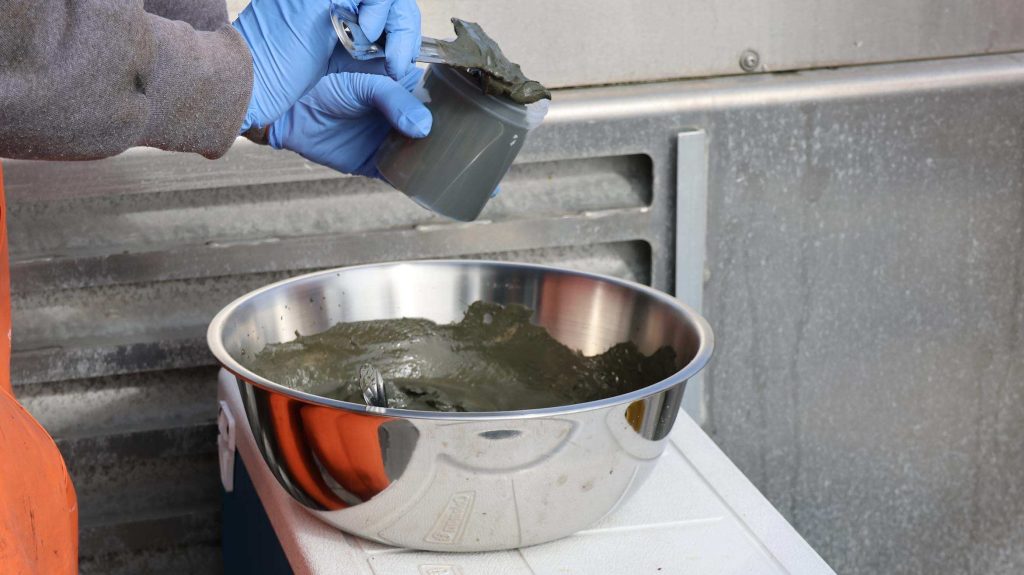
I also look at the sediment – the mud, the sand – that’s at the bottom of the Sound. Samples of that mud get sent to our King County Environmental Lab and they run all kinds of tests on it. They look at the amount of organic matter and nutrients in the sediment and measure various metals and organic chemicals that could potentially be harmful to organisms, from worms all the way up to people. We sample in the areas near wastewater treatment plant outfalls and further away from potential impacts.
That benthic environment is a really important link between Puget Sound and humans, and that’s where I like to play.
Before we go any deeper, can you explain what the benthic environment is? “Benthic” is not a word I heard much before I started working with our environmental scientists.
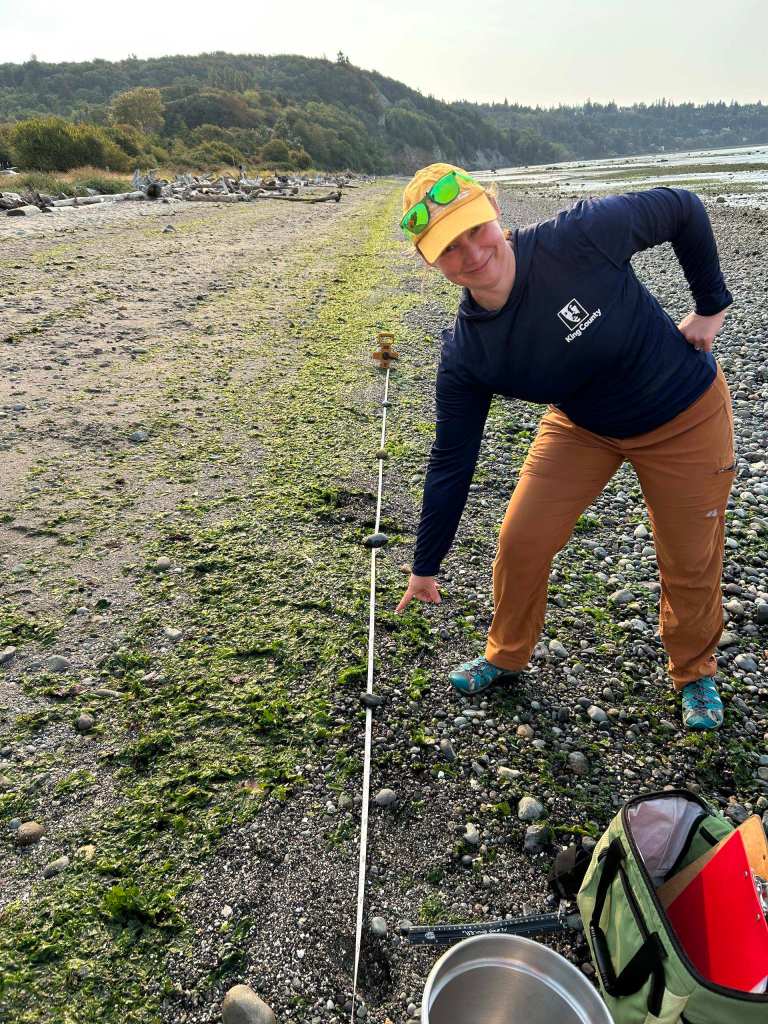
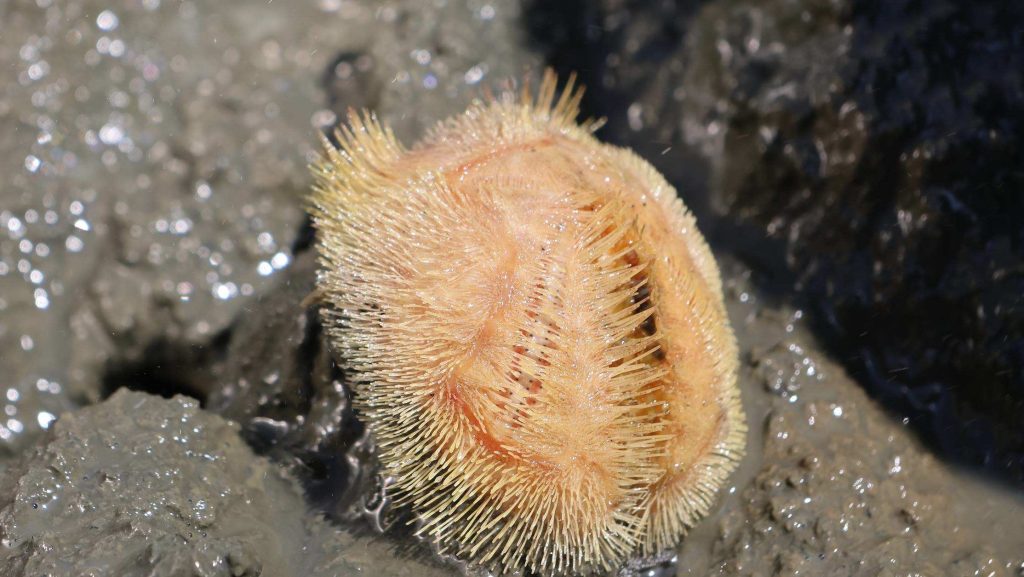
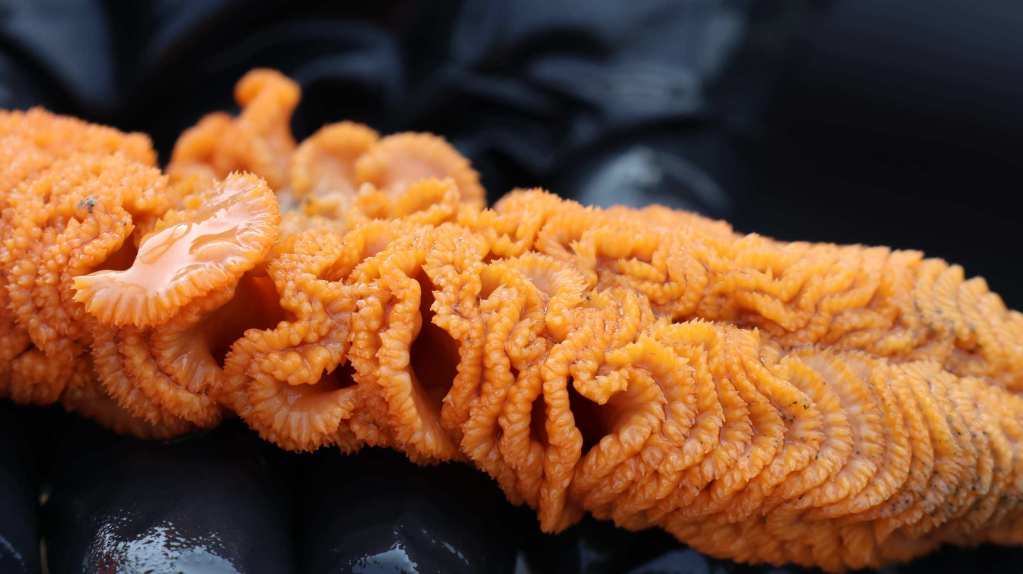
“Benthic” in the simplest terms means “bottom.” Puget Sound can be more than 900 feet in some places, so very, very deep at the bottom. Or the bottom can be, you know, right off the beach. The benthic environment is where the water meets the sand and that’s where we find benthic organisms. Some of them are crawling around on the surface. Some of them are buried right below or, like clams, they’re buried but they might have a little siphon that’s popping up above the mud. A lot of those are critters that don’t have a backbone… the slimy, squishy, crunchy little guys.


Okay, so these slimy, crunchy, spineless guys and this mud at the bottom of Puget Sound… how do they connect to the humans up here on dry land?
I’ll start at the watershed level. We know that there are all kinds of pollutants that can make their way into Puget Sound, which we are concerned about for a variety of reasons. Metals, and organic chemicals, most of which are human-made and not naturally occurring, make their way into Puget Sound through stormwater runoff, untreated wastewater discharges, various industrial inputs, and atmospheric deposition.
Those different chemicals will stick to particles of other things in the water, like sand or organic matter that’s just coming down a river, or plankton that are dying and decomposing, and they end up sinking to the bottom of Puget Sound and collecting there in the sediment.
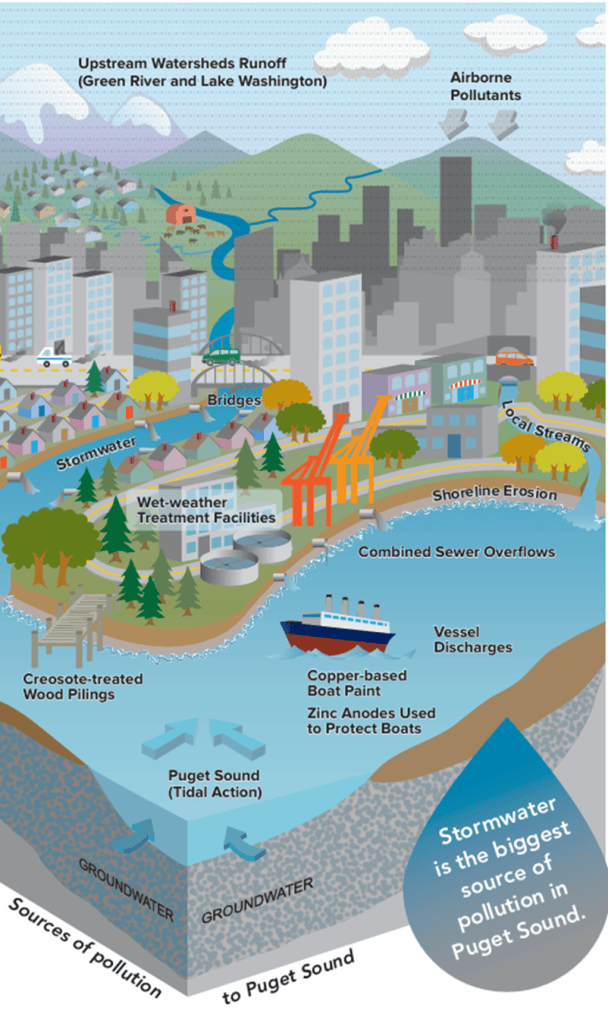
Those chemicals can be hard to measure in water because they’re so ephemeral and often very diluted. But once they attach to a particle that then sinks to the bottom, the sediment becomes kind of like a fingerprint. It’s a really good record keeper of all the inputs that have come into the environment.
And then you have all these often-small critters that are not only crawling along the sediment but also filtering the water. And in some cases, they may be eating the sediment and digesting organic matter directly from that. In all cases they’re really intensely interacting with that sediment.
So, the way the sediment concentrates what was in the water, these animals concentrate what was in the sediment?
Exactly. And while we’re not measuring the organic chemicals in the organisms, we know certain organisms are sensitive to, say, copper or low dissolved oxygen or PAHs (polycyclic aromatic hydrocarbons). We also know which ones are like, “Bring it on! I can live anywhere so I’ll take over if everything else dies.”
So, we can look at the community of organisms and ask, “Is there just this one type of organism living here and nothing else seems to be surviving?” Or do we see a vibrant community that has lots of organisms, including some that we know are sensitive? That would indicate the benthic environment is pretty healthy.
Moving up one level, we’ve got larger crabs and fish like English sole that eat benthic organisms. And if there are chemicals in those worms or those little crustaceans that the English sole are eating, then they incorporate those contaminants into their bodies.
The Science Section’s fish tissue monitoring program measures those contaminants directly, which is important because that’s the link to other predators higher up on the food chain, like humans.
I’m curious how you got here, working on invertebrates and sediment. What kinds of experiences and education led you to the work you do now?
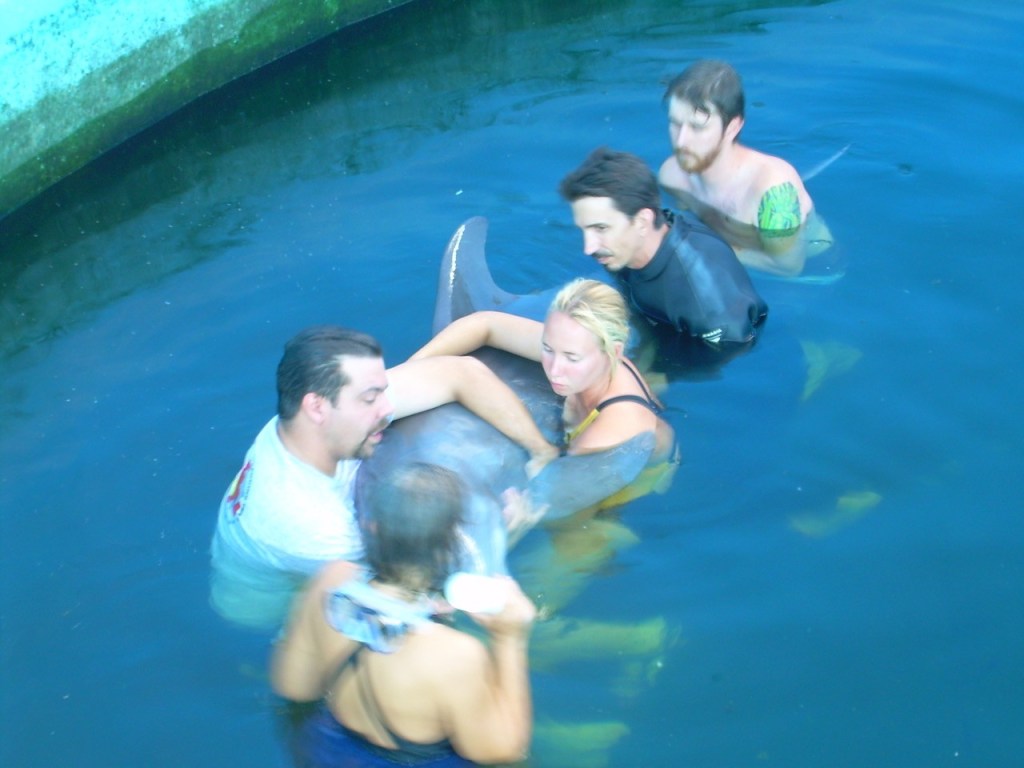
Well, I think it was middle school when I started volunteering at a local aquarium. They were focused on wildlife rescue, which, in Florida, meant lot of stranded dolphins and sea turtles – really charismatic organisms.
I decided I really enjoyed that and I was excited about helping these animals, so I went to college for marine science on the East Coast. I thought I would wind up in some sort of veterinary medicine field, a specialized veterinary tech for sea turtles, dolphins, that sort of thing.
The very first class that I took as an undergraduate was just a general zoology course. I remember getting the syllabus and seeing that the vertebrates – the turtles and the dolphins and all of that – weren’t until the very, very end of the semester and I couldn’t wait to get there. But first we spent almost the entire course learning about all the worms and the clams and these bizarre critters: how they feed, how they reproduce, the variety of body layouts. And I was like, “Whoa!”
The invertebrates were so much cooler and more interesting in a morphological sense. You look at the inside of a turtle or a human and there’s not a lot of difference. But you look at a worm versus an octopus versus a sea star and they’re completely different! I found it fascinating that invertebrates are so diverse and weird and fell in love with them.
I went to grad school to dive into a very niche field of studying sea anemone taxonomy and morphology, which brought me to the Pacific Northwest and, eventually here to the Science Section after a short stint working for the State of Florida as a biologist.
[Click here for bonus sea anemone content!]
Now that you’re here, what is your favorite type of workday?
Well, my standard workday means spending a lot of time on my computer. I’m writing sampling plans, analyzing data, making sure that there aren’t any data quality issues, or writing reports.
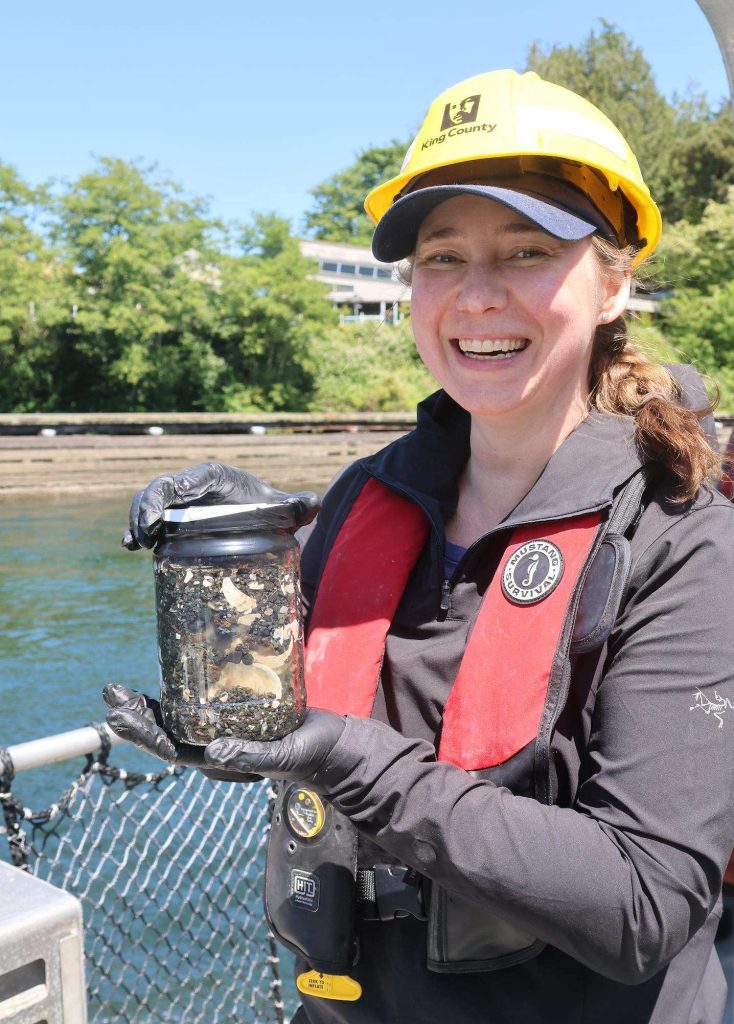
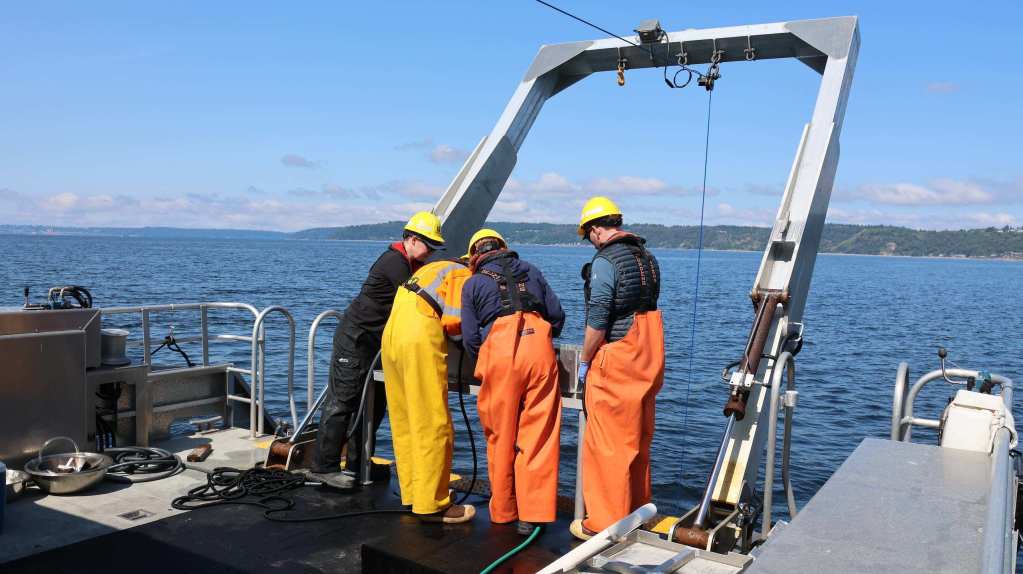
But my favorite days are those couple of days each year when I get to go out with our wonderful King County Environmental Lab and collect sediment samples with them. That’s normally late spring, which is a lovely time to get out on the water. I like to bring snacks to the crew, so they keep inviting me back.
I love being out on the boat watching those grabs go down and take a chunk out of the bottom of the Sound and bring it back up to us. Some of our sampling sites are 900 feet deep, so no one sees that material or those organisms unless you bring them to the surface.
It’s super magical to see this piece of deep-down Puget Sound come to the surface and it helps ground me. These teeny tiny animals are more than numbers. I spend most of my time in the numbers and a spreadsheet, so that grounding – this is what the numbers mean! – makes those my favorite days.

Last question, your choice: What’s your favorite benthic critter, OR what’s something you wish more people knew?
Sea lemon nudibranch (Peltodoris nobilis) is my favorite. There are so many cool critters out there, but they’re cute and they’re local and they’re my charismatic macrofauna.
But I think that leads into the other question, “What do I wish people knew?”
Don’t overlook the little guys! Everyone loves orcas and otters, and they’re wonderful. But there are so many bizarre critters out there that are such an important link to everything else.
Whether it’s in Puget Sound or in our streams, there are all these tiny critters that most people probably don’t think about or may even find gross. I get it! But they are all important links in the food web. They’re all eaten by someone, and important in their own way. Like us, they’ve all made Puget Sound their home and are able to survive here adapted to this environment. I think that’s really cool, the variety out there.
The next time you go to the beach, find something small under a rock that you haven’t seen before. Try to figure out what it is and learn one cool fact about it. That’s my challenge for people.
Links and Resources:
- More on the blog: Learn more about the anemones Wendy first described
- More on the blog: Get to know a King County ecotoxicologist!
- Marine monitoring program | KingCounty.gov
- Fish tissue monitoring program | KingCounty.gov
- Stream macroinvertebrates | KingCounty.gov
- What is a watershed? | KingCounty.gov
- King County Environmental Lab | KingCounty.gov