If you spent October cheering on the Seattle Mariners or even casually following the local news, you probably know about Humpy, the losingest fish in the Mariners’ popular Salmon Run event.
On the field, Humpy the Pink Salmon (Oncorhynchus gorbuscha) is the lovable underdog at the back of the pack (but not a “dog salmon”—that’s chum, Oncorhynchus keta). The goofy fish in a life jacket finally won the Salmon Run during a high-stakes post-season game. When the Mariners went on to win in extra innings, many fans gave Humpy the credit and a star was born.
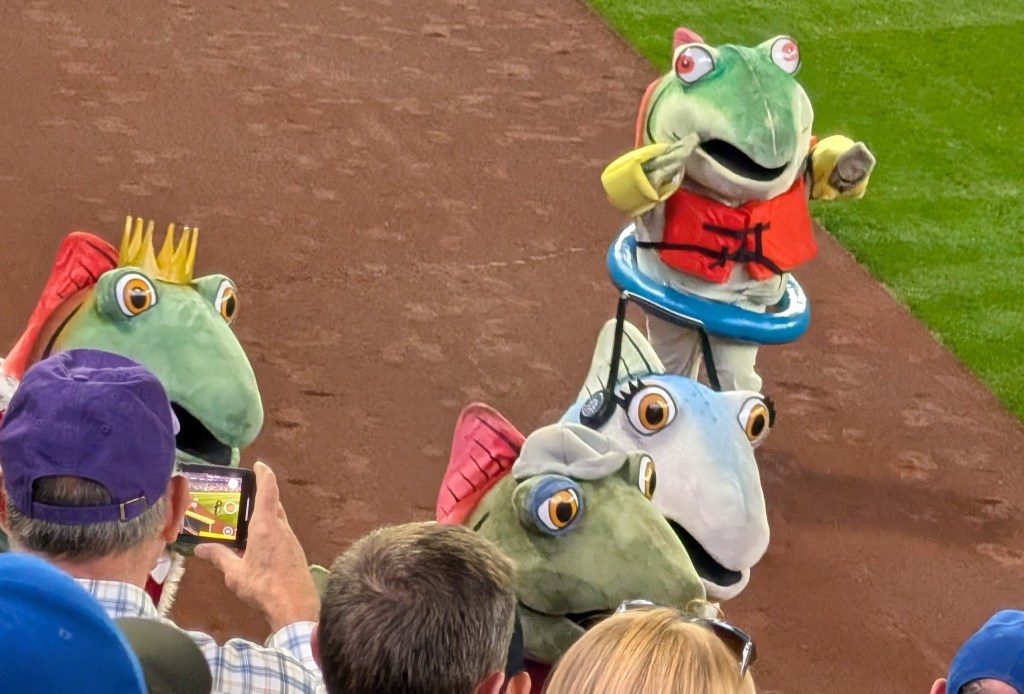
Even here at the Water and Land Resources Division where salmon are a big part of our work, staff members were abuzz over Humpy. Pink salmon don’t always get such all-star treatment, and something important was missing from the Humpy hype: real fish! As Humpy enjoyed the limelight and celebrated with Seattle’s Mayor Harrell, millions of actual pink salmon were busy with life and death matters in streams and rivers across King County.
Little pink fish
Pink salmon are the smallest of the fall-spawning Pacific salmon and typically weigh between 3 and 5 pounds. By comparison, coho salmon (Oncorhynchus kisutch) average 8 to 9 pounds, and Chinook salmon (Oncorhynchus tshawytscha) can weigh more than 100 pounds!
Like the mascot they inspired, pink salmon are also called humpback salmon or “humpies” because of the large hump males grow during spawning season. They prefer to spawn relatively close to the ocean compared to some other salmon species, which makes Puget Sound rivers ideal pink salmon habitat.
Check out the video below for an up-close look at spawning humpies. This footage was captured in 2013 at King County’s Lower Boise Creek restoration site in Enumclaw. Can you spot the hump-backed males?
After pink salmon fry hatch, they quickly head toward the sea instead of rearing in streams like most other salmon species. Just two years later, those fish return as adults, ready to spawn a new generation.
In Washington, pink salmon return in the fall, but only during odd-numbered years like this one. Pinks are our region’s most abundant salmon species, and state and tribal comanagers forecast that 7.8 million pink salmon would return to Puget Sound in 2025. Maybe this year’s pink salmon energy gave Humpy the boost he needed achieve his own historic victory.
Not quite the last splash
October baseball is over for Mariners fans and the pink salmon run is winding down. Fortunately for salmon fans, other species are still visible in streams and rivers across our area. The Salmon Seeson map below shows publicly accessible salmon spotting spots. Some sites even have volunteers to share educational materials and help visitors find fish.
The Salmon SEEson program, led by the Lake Washington/Cedar/Sammamish Watershed Salmon Recovery Council (WRIA 8), brings together agencies, nonprofits, and community partners to inspire curiosity and commitment to salmon recovery in our region, including King County. Check out the extra links below to learn more about King County salmon and our research.
Think pink
Next year if you find yourself at a baseball game cheering for a sprinting, bipedal salmon, start a conversation with your fellow fans. Have they seen the Salmon SEEson map? Do they know how Humpy got his name? Or that pink salmon won’t be back in King County until 2027?
Fins crossed that Humpy doesn’t have to wait as long for his next win.

Links and Resources:
- Information about fish and shellfish | kingcounty.gov
- Salmon and trout identification | kingcounty.gov
- How a major restoration project is improving salmon health | kingcounty.gov
- Possible breakthrough for native Kokanee salmon | kingcounty.gov
- Breakthrough: A new treatment for a salmon-killing tire chemical | kingcounty.gov