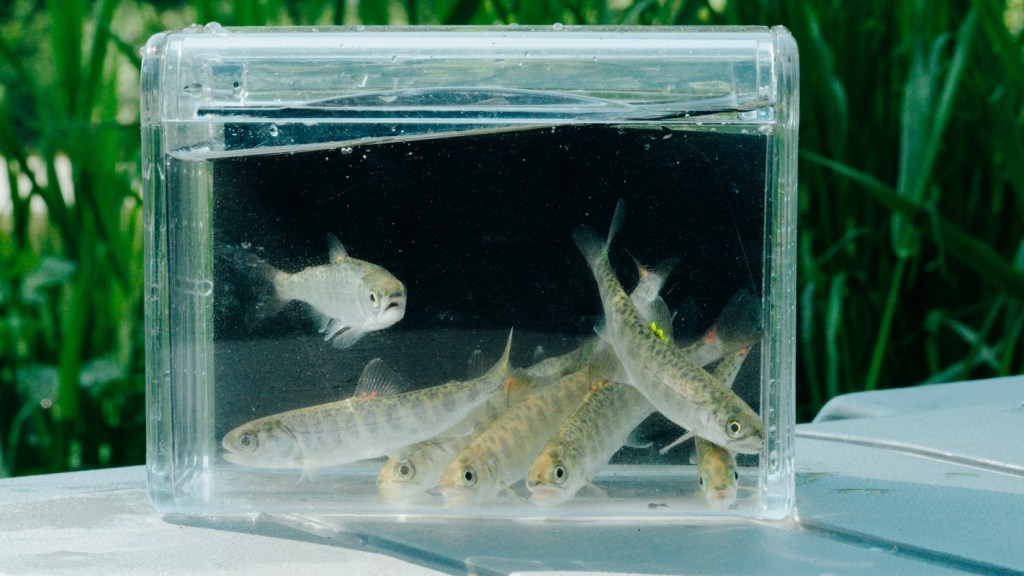
It’s official: the students and the salmon are back! Schools across the region are in session and Salmon See-son is ramping up as Chinook, sockeye, coho, and chum salmon make their way home to the rivers and streams of King County. (Pink salmon will be back next year!)
Despite thousands of years of multigenerational experience, the salmon’s journey is still a struggle. It gets even more challenging when salmon run into warmer water, pollution, habitat loss, invasive species, and blocked streams. All these problems make it harder for salmon at every life stage to survive and spawn successfully.
Each year, students across our region learn about salmon and the threats they face. Some students take these lessons to heart and begin advocating for salmon and taking action in their own communities.
That’s where a group of outspoken third graders comes in.
Love letters for salmon, petitions for the rest of us
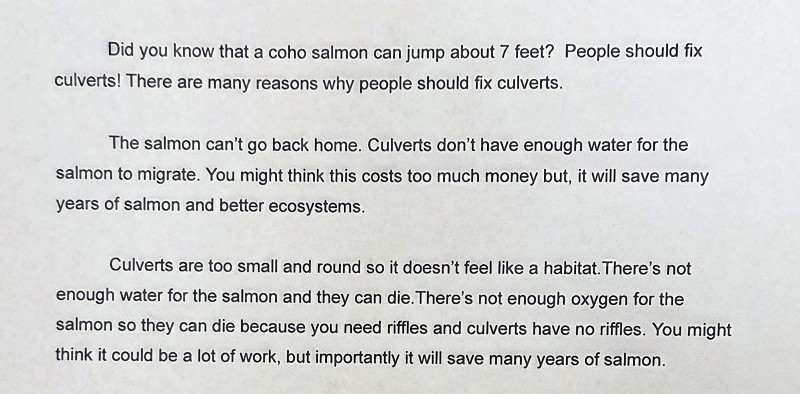
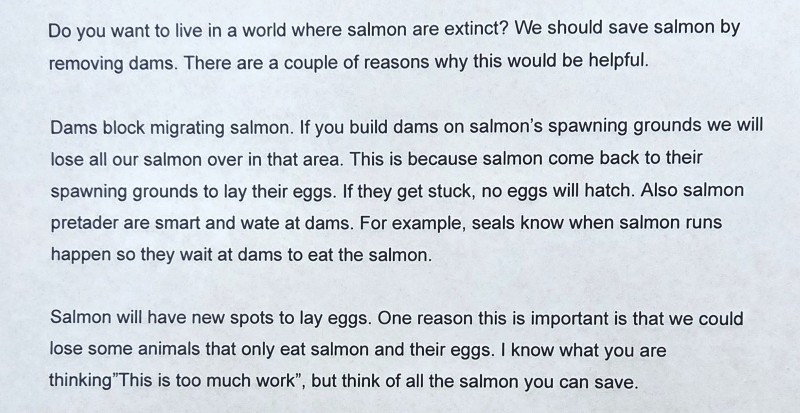
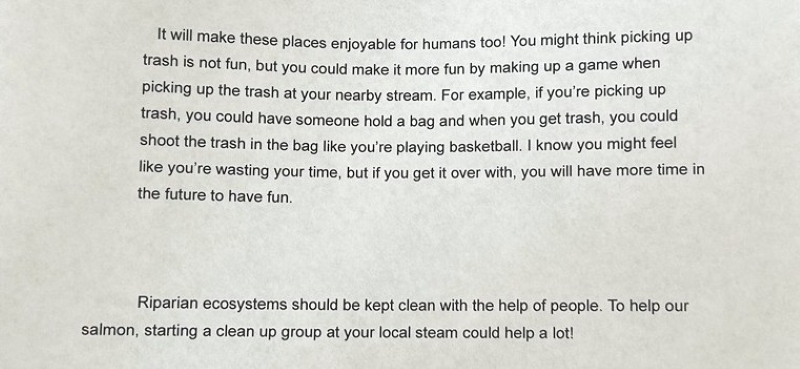
This spring, a thick manilla envelope arrived at the DNRP office in downtown Seattle hand-addressed to the Science Section. Inside, we found a stack of letters from the third-grade classes at Brighton School in Mountlake Terrace.
Like many others, these students researched salmon and human actions that affect them. But the kids also had ideas they wanted to share with someone who could help, so they started writing letters.
The students described how plants and trees, pollution, dams, culverts, and other structures can impact salmon and rivers. They also shared their ideas for how people can help.

A friendly reply from an expert
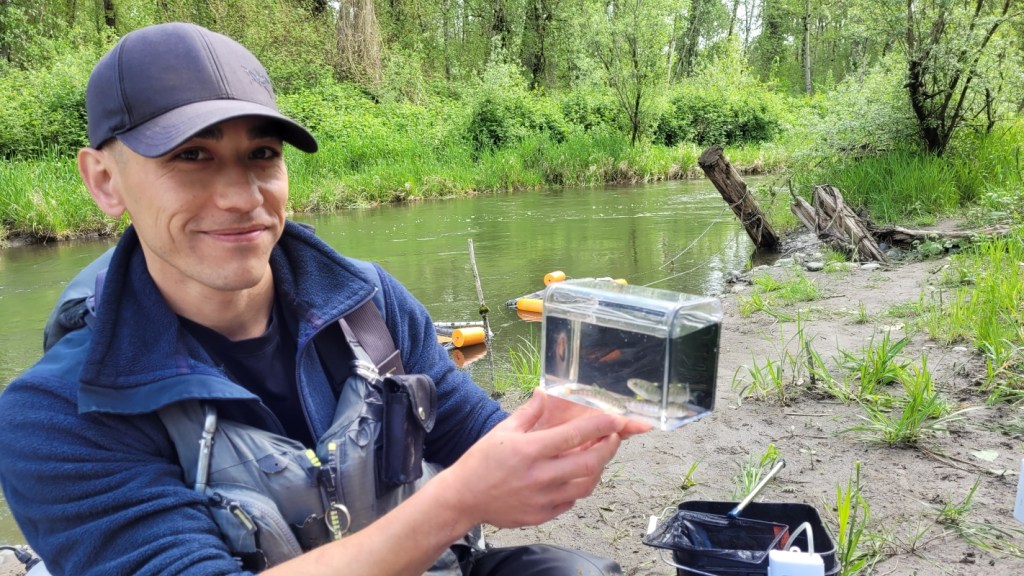
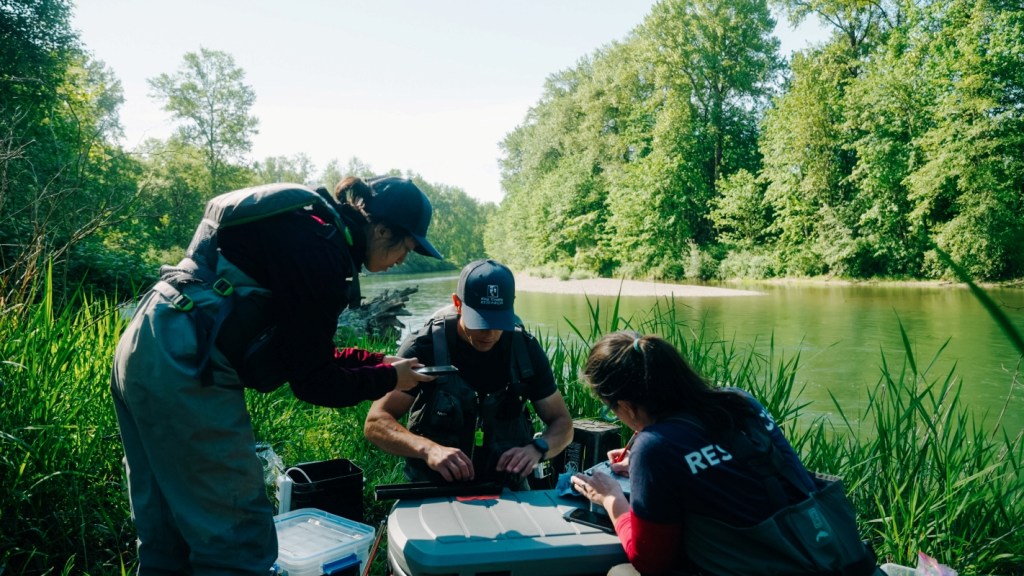
Our team was delighted and inspired by these letters and Josh Kubo, a fish ecologist in the Science Section, drafted a handwritten response for the students. We sent his letter and some photos back to the Brighton School teachers to share with their classes.
Here’s what Josh had to say:
Dear Brighton School third graders,
Hi everyone! My name is Josh Kubo, and I’m a fish scientist who works for your local government. Thank you so much for sharing your great ideas and questions. I really enjoyed hearing what you care about. Your thoughts about salmon and streams were smart and super important!
I want to tell you a few quick stories about how people in your community are helping salmon.
Plants and trees near streams are very important. They give shade to keep the water cool and help keep dirt from sliding into the water. Trees and plants also provide bugs that young salmon really like to eat. What’s amazing is that lots of people including scientists, volunteers, and even students like you have been planting trees to help salmon. In some places, we’ve planted thousands of them! That’s really great and we all need to continue planting to help salmon and keep rivers healthy.
You also talked about dams. You’re right, dams can make it harder for salmon to swim up streams. But dams can also help people by making electricity and storing drinking water. So, we have to think carefully about when we should remove a dam and when we should help salmon get past dams. Sometimes we build fish ladders, which are like a salmon staircase to help them up and over dams. If you have been to the Ballard Locks in the fall, you might have seen salmon using a fish ladder to swim upstream.
A great example of a dam removal happened on the Pilchuck River, not too far from your school. The Tulalip Tribes, a local Native American tribe, worked on a project to take out the old Pilchuck River dam. And guess what? As soon as it was gone, salmon started swimming farther upstream right away! Now, they can enjoy all the river.
You all shared really important ideas. We are all caretakers of our salmon and streams. The government and many others are working hard to help salmon, and your curiosity and care make a big difference too. Together, we can take care of our salmon, our neighbors, and this amazing place we call home.
Sincerely,
Josh Kubo
Putting science to work for salmon recovery
As Josh mentioned in his letter, King County and many of our partners are working on some of the same solutions the Brighton School students are excited about.
For example, large-scale efforts like the Fall City Floodplain Restoration Project are rebuilding side channels and planting native vegetation to give young salmon more places to eat, hide, and grow. The video below, featuring Josh and other Science Section researchers, shows how the restoration work is helping juvenile Chinook salmon.
Experts from the Science Section also work with different teams and organizations to protect spawning salmon from toxic pollution and care for habitats that juvenile salmon need to eat and grow before they head to the ocean to become adults.
And our colleagues in DNRP’s Fish Passage Restoration Program are hard at work removing structures in streams and rivers that block salmon from reaching historic habitat. (Watch a King County video about some of this work)
Protecting salmon then, now, and in the future
Salmon recovery and conservation take collaboration, and King County partners with Tribes, cities, nonprofits, and community groups to work toward our shared goals. Earlier this year we celebrated 25 years of salmon conservation with a video that highlights how working collectively creates bigger, more lasting impact.
Healthy ecosystems depend on all of us. These letters are a reminder that we all have a role in protecting salmon and making sure that future generations of students will see future generations of salmon right here in the streams and rivers of King County.
Links and Resources:
- Fall City Floodplain Restoration Project | KingCounty.gov
- Fish Passage Restoration Program | KingCounty.gov
- Lake Sammamish kokanee | KingCounty.gov
- Salmon conservation and recovery | WRIAs 7, 8, 9, 10
- Salmon SEEson | KingCounty.gov + partners