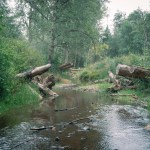
Spills and other forms of pollution harm streams and other water bodies. In King County, we do our best to monitor and maintain water quality, but we can’t be everywhere at once… And that’s where you come in! If you see something concerning in streams, storm drains, or other water bodies, it’s important to know how to report them to the appropriate authorities to ensure they’re addressed quickly.
Sometimes, the problem is obvious. Other times, it may appear alarming without actually being a problem at all: a rainbow sheen that is actually bacteria, orange water stained by natural minerals, or foam from the natural breakdown of organic matter.
Below we share some common sights in and around streams. Learn what you should report⚠️, what’s harmless and natural ✅, and how to tell the difference. Click the photos to take a closer look!
Blooms and scums
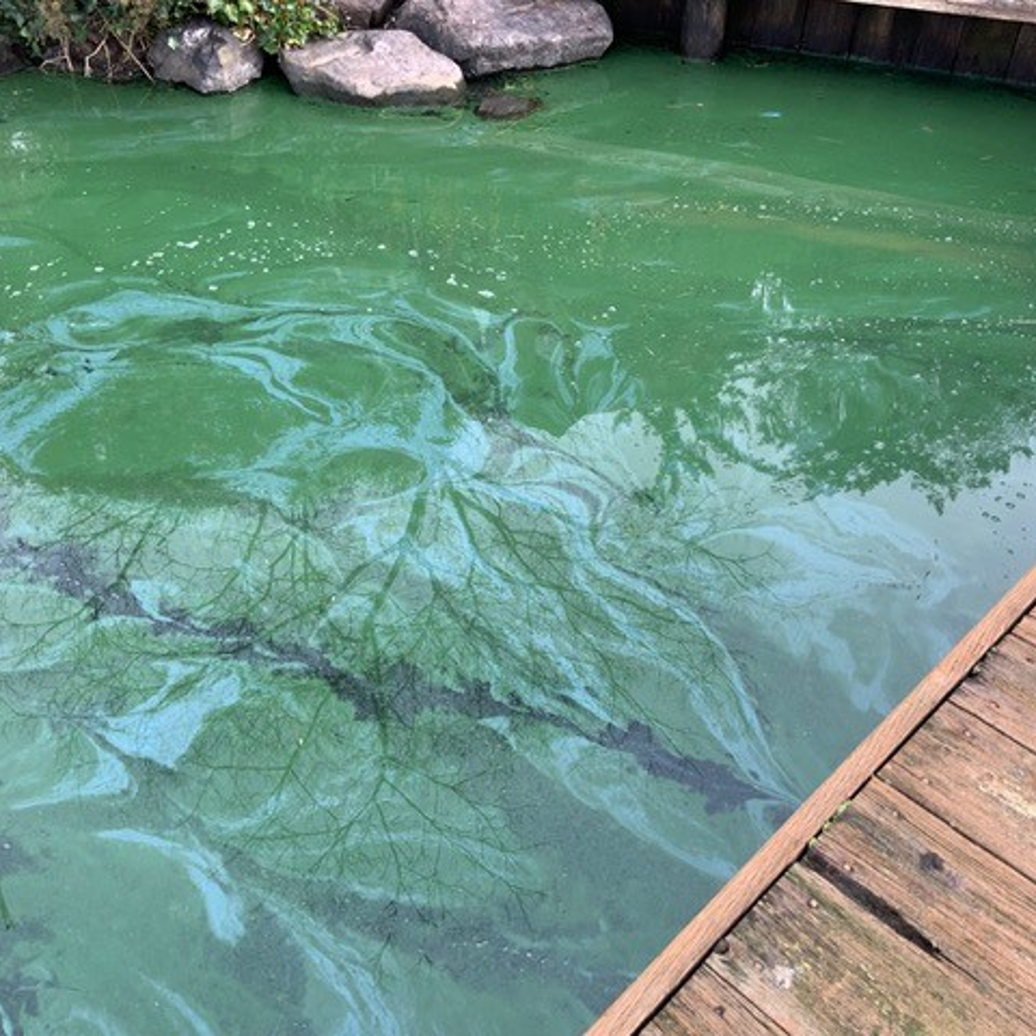
A green or yellow scum in the water could be due to a variety of causes. A common cause is algae growth, which is normal in lakes and streams and often seasonal, especially in warmer months and slower-moving water. While filamentous green algae are harmless, cyanobacteria (blue-green algae) can produce toxins harmful to people and pets. (Learn more about toxic algae on KingCounty.gov)
⚠️ Report it: Cyanobacteria
Blue-green scums or streaks across the water, or thick green water appearing like pea soup.
Also called toxic algae or blue-green algae, cyanobacteria are technically photosynthetic bacteria rather than algae, and some produce toxins. Cyanobacteria can make people and pets sick. Report suspected blooms so experts can monitor the blooms and assess public health risks.

✅ Harmless: Filamentous green algae
Bright green, stringy mats growing from the substrate or floating at the surface of the water.
Often, oxygen bubbles produced by the algae during photosynthesis will be trapped in the mats.
✅ Harmless: Duckweed and Azolla
Tiny floating plants. A dense cover can look like an algae bloom from a distance, but up close you’ll see distinct leaf-like fronds.

✅ Harmless: Pollen accumulation
Yellow-green powdery scum along stream edges in spring.
Pollen breaks apart easily in the water.

FIELD TEST: Is it cyanobacteria?
Want to see if an algae bloom is green algae or potentially harmful cyanobacteria? Use a stick or jar test!
Stick Test: Run a stick through the algae. Filamentous green algae can be lifted out like wet hair. Cyanobacterial mats tend to break apart and slip through.
Jar Test: With gloved hands, fill a jar with water and some algae. Seal the jar with a lid and place it in a cool dark place overnight. Green algae settles to the bottom in clumps, while cyanobacteria often forms a layer at the top or stays suspended like paint.
Foam and suds
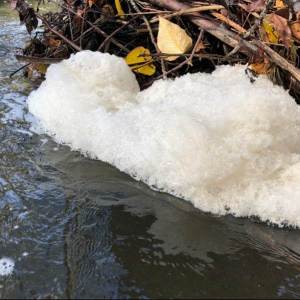
Foam gathers wherever moving water traps air. It can often be found in streams accumulating against rocky banks or logjams, or on lakes along windswept shorelines. Foam forms when surfactants in the water lower surface tension and allow bubbles to form more easily when the water is agitated. The main concern with foam in the water isn’t the foam itself, but whether the foam-forming surfactants came from natural sources or pollution.
⚠️ Report it: Soapy suds
Bright white, soapy-looking suds, sometimes with a perfume-like smell or rainbow sheen. Soaps and detergents, such as household cleaning products and laundry detergents, have manufactured surfactants to help with cleaning. These detergents can harm the aquatic ecosystem.
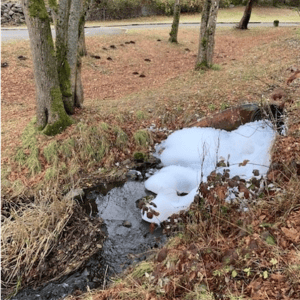
✅ Harmless: Natural foam
Cream-colored or tea-tinted foam. As leaves, algae, and plant matter decompose in the water, they release organic compounds that act as natural surfactants. It often occurs in forested streams after leaf fall and carries an earthy or fishy smell.
Surface film or sheen
A rainbow sheen on the water surface looks concerning but isn’t always due to pollution. The colors come from a phenomenon known as thin-film interference. While some light reflects off the top surface of the thin film, light also passes through and reflects off the bottom surface. The light that travels through the film covers a little extra distance, so when the two reflections combine, the light waves mix and some colors are boosted, while others are canceled out. Because the thickness of the sheen varies across the surface, the color shifts from spot to spot, giving the sheen its rainbow appearance.
There are two common causes for films that you might see in King County waters.
⚠️ Report it: Petroleum sheen
An oil film that swirls and flows back together when disturbed. Petroleum sheens are caused by motor oil, gasoline, or other sources of petroleum products entering the water.

✅ Harmless: Bacterial sheen
Oily-looking films that break into stiff, angular plates when disturbed. Bacterial sheens form naturally in streams fed by iron-rich groundwater.
Iron-oxidizing bacteria live at the water surface and “feed” by oxidizing it for energy. The iron then settles out and mixes with the bacterial biofilm, forming a thin, brittle crust on the surface that can have a rainbow sheen similar to petroleum. Bacterial sheens are usually accompanied by orange-brown staining on rocks or sediment in the same area.

FIELD TEST: Is it petroleum or bacteria?
To test whether a rainbow sheen is natural or not, move a stick through the film.
- It’s likely petroleum if it swirls and flows back together with a continuous rainbow sheen, it’s likely petroleum.
- It’s likely from natural iron-oxidizing bacteria if it breaks into stiff, plate-like fragments.
Discolored water
Water color is a useful clue, but timing, odor, and weather are also important factors to help differentiate pollution from natural causes.
⚠️ Report it: Cloudy gray water with strong sewage odor
This can indicate a leaking sewer line or failing on-site septic system (OSS), releasing pathogens and nutrients into the stream.
⚠️ Report it: Milky white or chalky water
This may indicate paint or concrete washout, often traced back to construction or home projects. The chemicals from paint and concrete washout can be lethal to aquatic life.

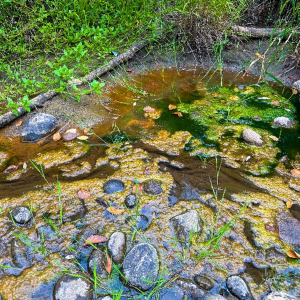
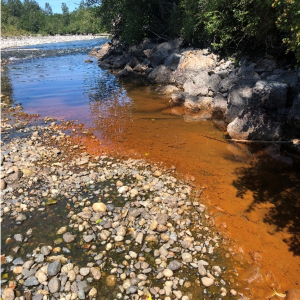
✅ Harmless: Orange or rust-colored streambed
This is caused by the same types of iron-oxidizing bacteria that produce the brittle bacterial sheens. As the bacteria oxidize metals like iron and manganese dissolved in the water column, the metals precipitate out as a rust-colored mineral coating.
Turbidity *
Turbid water is cloudy or hazy. Turbidity can come from natural sediments, but it can also indicate human-caused problems.
⚠️ Report it: Very muddy or gray water, or a plume with a clear source
Water that looks like chocolate milk or a cloudy plume coming from a pipe, ditch, or construction site, can point to construction runoff, dredging, or another discharge upstream.
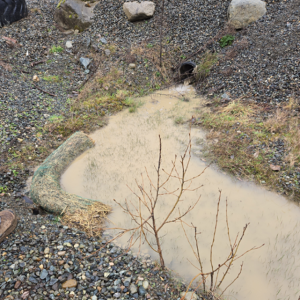
✅ Usually harmless: Slightly cloudy or lightly tinted water during or after rain
Storms naturally wash some sediment into streams and stir up the streambed, so a little cloudiness is normal. It will look about the same across the whole stream and clear up soon after the rain stops.
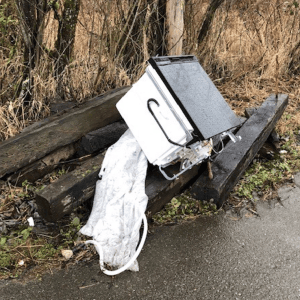
Litter and illegal dumping
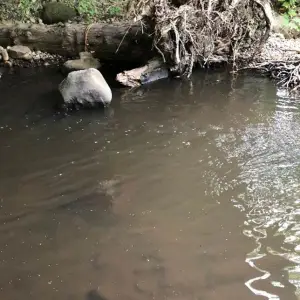
This is the one category with no natural counterpart: trash and dumped material always degrade streams and should be reported, even when the material itself is natural.
⚠️ Report it: Litter and dumped materials
Appliances, tires, construction debris, and similar dumped materials degrade habitat and water quality regardless of the material.
How to report spills or pollution
If you spot spills or pollution in a stream or water body, please report it! Below are some resources to help you report it to the appropriate responding agency.
If you come across an emergency or traffic-related spill, please call 911.
For nonemergency water quality issues, reporting the issue to the appropriate local city or county jurisdiction is the fastest way to ensure the problem is addressed:
- If you’re in a city area, visit the regional referrals webpage to find contact information for the city you’re in.
- For unincorporated King County, use the tables on the King County reporting webpage to help you find the appropriate responding group.
- If you need help determining whether the issue is in an incorporated or unincorporated area, visit King County’s iMap. On the standard base map, beige-shaded areas represent incorporated cities. To see how these boundaries overlap with natural areas, go to the Layers List and make sure the Administrative Areas and Cities and unincorporated areas check boxes are selected (see below).

If you’re unsure which jurisdiction applies and it’s not an emergency, you can use the Washington Department of Ecology’s statewide Environmental Report Tracking System (ERTS) to report a spill or water quality concern. Your report will get routed to the appropriate agency for further investigation and response.
*The Turbidity section of this article was added on November 5, 2026.